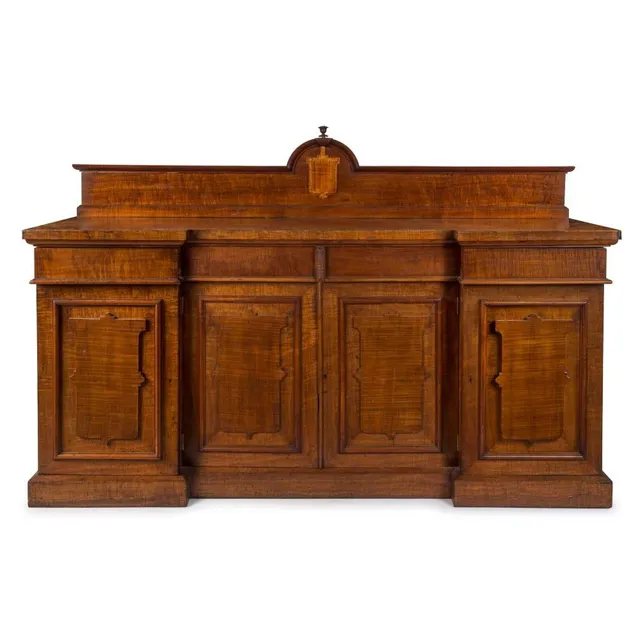
Colonial Blackwood Sideboard by Thwaites & Son, Melbourne (1855)
George Thwaites & Son of Melbourne, stunning Colonial sideboard, made from selected choice cuts of fiddleback blackwood, veneered onto Australian cedar, circa 1855. Note, this design was taken from 'Blackie's Cabinet Makers Assistant' [1853]. Originally…
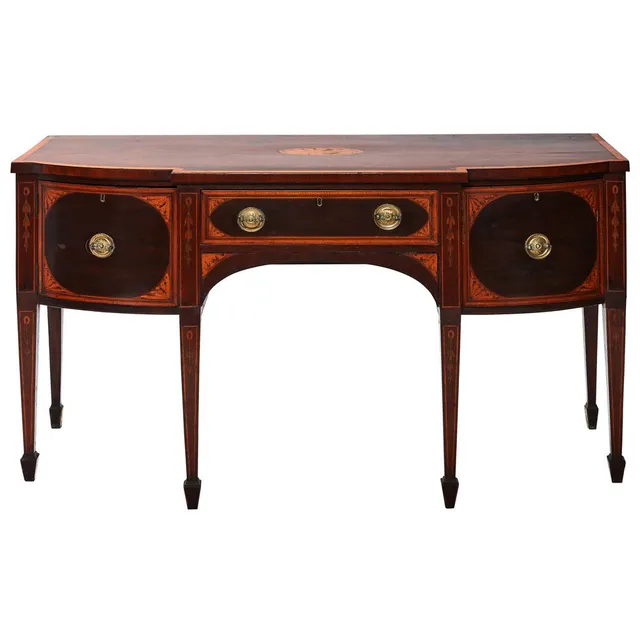
George III Mahogany Breakfront Sideboard with Inlay
A George III mahogany and satinwood breakfront sideboard, inlaid to the centre with a shell and crossbanded throughout, the central drawer flanked by curved cupboard and deep drawer, with shell inlay to each corner, on square tapering legs inlaid with…
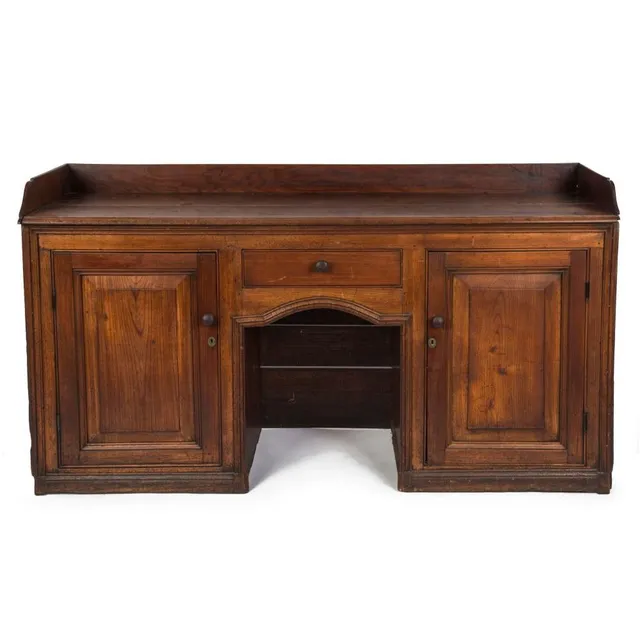
Tasmanian Twin Pedestal Sideboard, 19th Century
A Colonial Australian blackwood twin pedestal sideboard, Tasmanian origin, early to mid 19th century originally owned by Richard Robert Crocker who arrived as a free settler in Van Diemen's Land in 1828 100 cm high, 183 cm wide, 58 cm deep
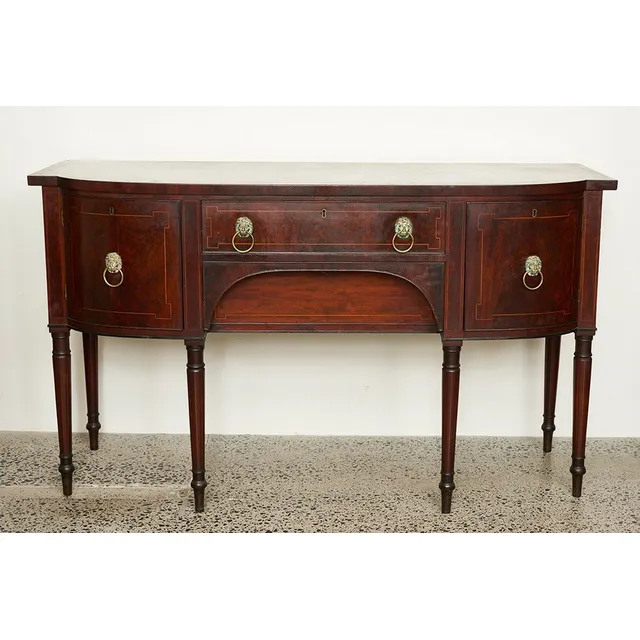
Mahogany Sideboard with Lion Mask Handles and Inlay Decoration
Sheraton bow fronted mahogany sideboard, c. 1785, with two long drawers with satinwood string inlay and lion mask and ring brass handles, flanked by bombe cupboard doors, raised on six tapering legs with similar inlaid decoration, height 93 cm width 160…
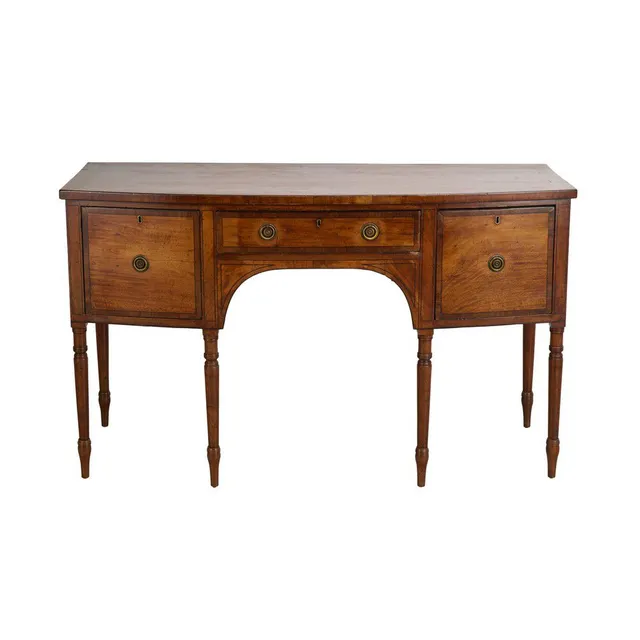
George III Mahogany Sideboard with Ebony Inlay
A George III mahogany sideboard, early 19th century, the bow-front top above an arrangement of three drawers, raised on tapering turned supports, the top and front inlaid with ebony stringing, 93 cm high, 152.5 cm wide, 61.5 cm deep. Provenance: Private…
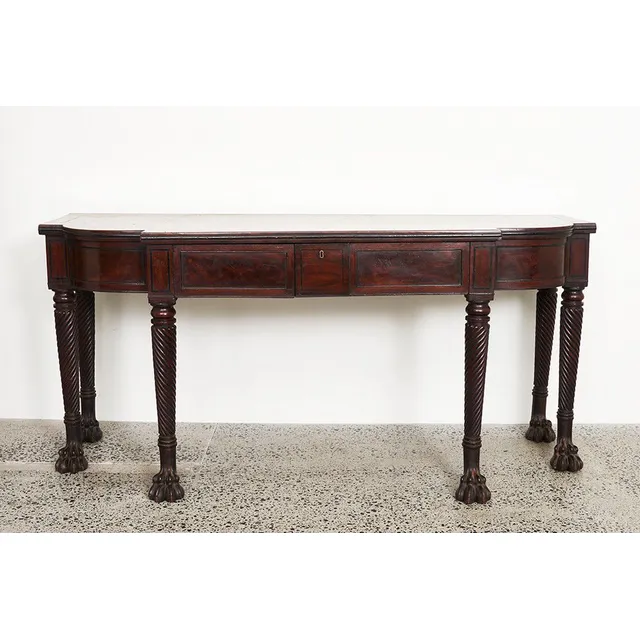
Regency Mahogany Breakfront Sideboard with Claw Feet
Regency mahogany breakfront sideboard, c. 1820, the shaped top with ebony string inlay, above a two drawer frieze, one with felt lining for silverware, raised on six turned legs with prominent claw and paw feet, height 91 cm width 200 cm depth 68 cm.…
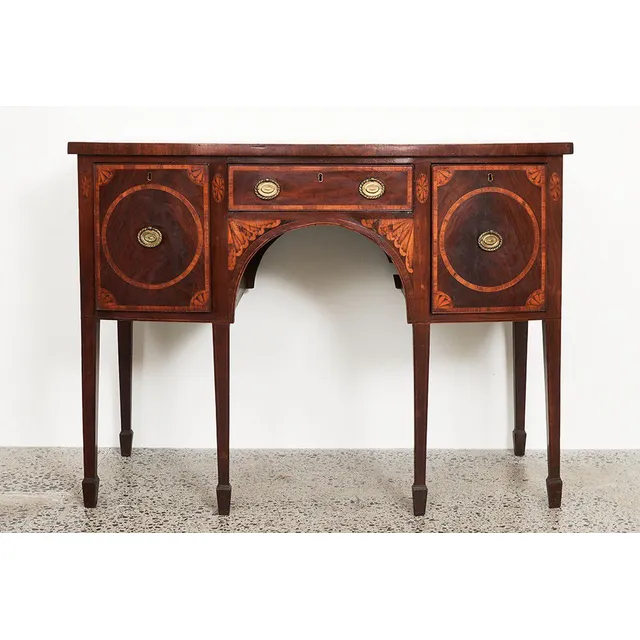
Sheraton Mahogany Sideboard with Marquetry Inlay
George III Sheraton style mahogany and marquetry sideboard, c. 1790, the shaped rectangular top decorated with feather wood banding and floral inlay, above a central drawer flanked by two deep drawers with brass pulls, raised on tapered legs with spade…
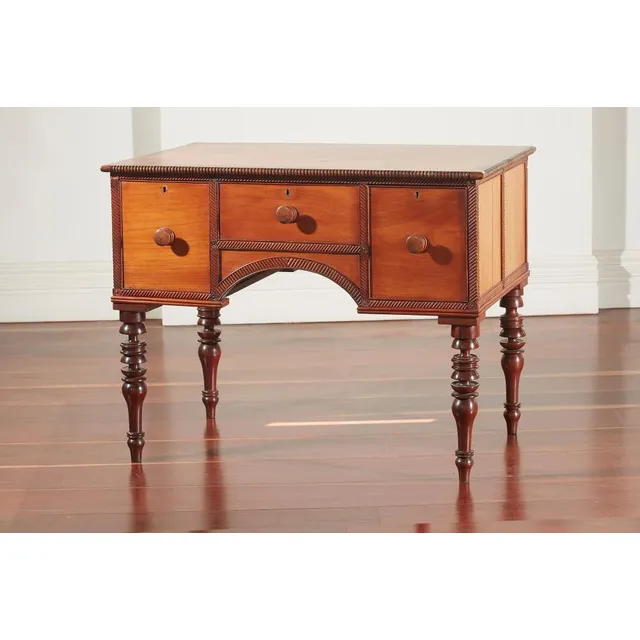
Colonial Cedar and Blackwood Sideboard from Tasmania, c. 1825
A Colonial cedar and blackwood sideboard, Tasmania, early 19th century, with two deep drawers flanking a central drawer above an arched opening and angled reeded mouldings decorating the exterior, 83.5 cm high, 105 cm wide, 76.5 cm deep. Provenance:…
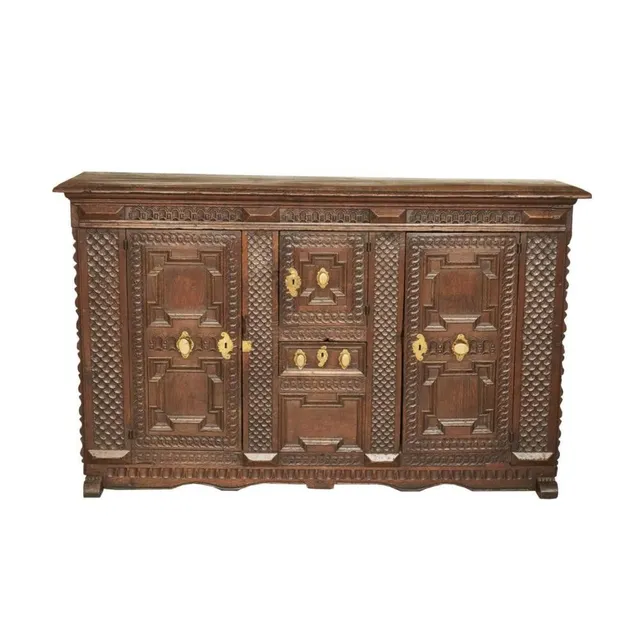
18th Century Spanish Oak Sideboard
Spanish oak sideboard, 18th century, the rectangular top with moulded edge, above an arch carved frieze, over a small door, short drawer and secret drawer flanked by two panelled doors, with brass hardware, height 110 cm, width 179 cm, depth 51.5 cm.…
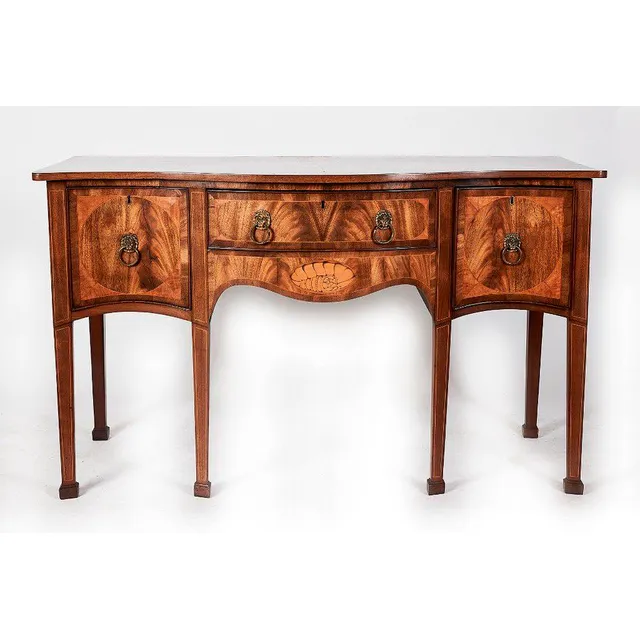
Regency Mahogany Serpentine Sideboard with Inlay & Provenance
Regency mahogany serpentine sideboard, c. 1820, having a central drawer flanked by two panelled doors, over a shaped apron inlaid with shell motif, raised on square tapering legs with satinwood string inlay, height 102 cm, width 101 cm, depth 47 cm.…
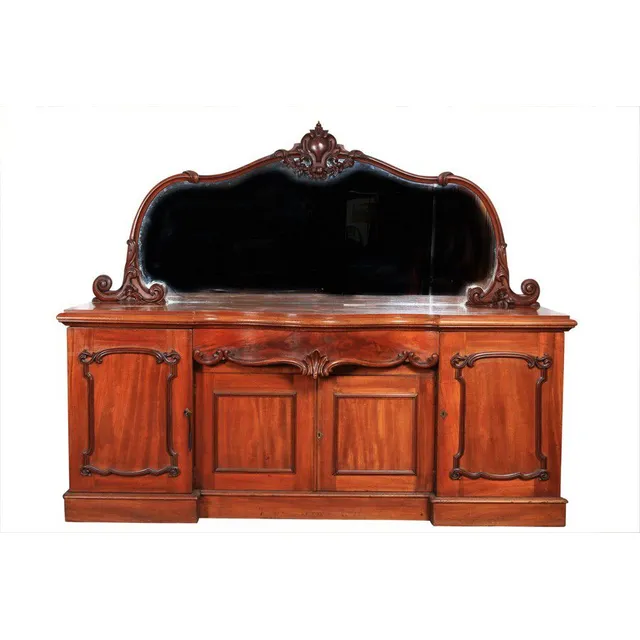
Cedar Sideboard with Carved Mirror Back
George Debney sideboard, cedar serpentine front, with large carved mirror back, one drawer, four door, stamped to back, length 235 cm
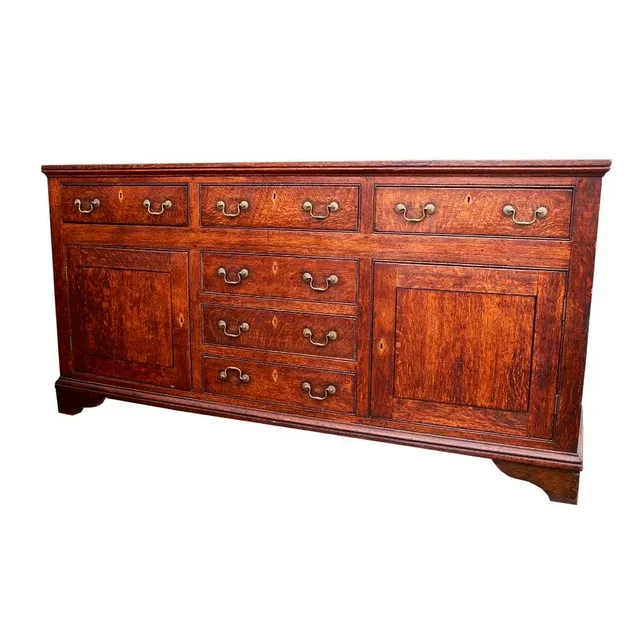
George III Oak Sideboard, c. 1780
George III oak sideboard, c. 1780, the frieze with three drawers, above three further drawers, flanked by cupboards, raised on bracket feet, height 93 cm width 183 cm depth 50 cm. Provenance: Auchinachie Antiques, Woollahra, NSW
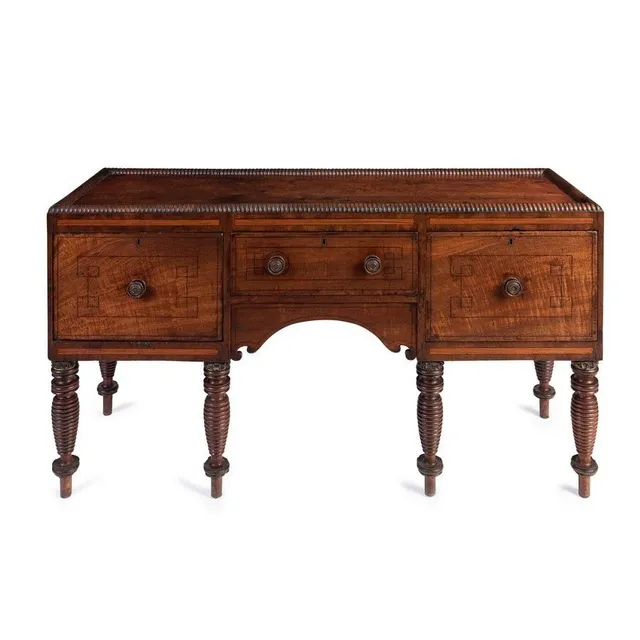
Butheroe Sideboard: A Historic Family Heirloom
The 'Butheroe' sideboard, Early Australian cedar six legged sideboard, Sydney, circa 1820, family history purports it was originally a wedding gift from Governor Lachlan Maquarie to John Nevell and Elizabeth Vincent, daughter of James Vincent (carpenter…
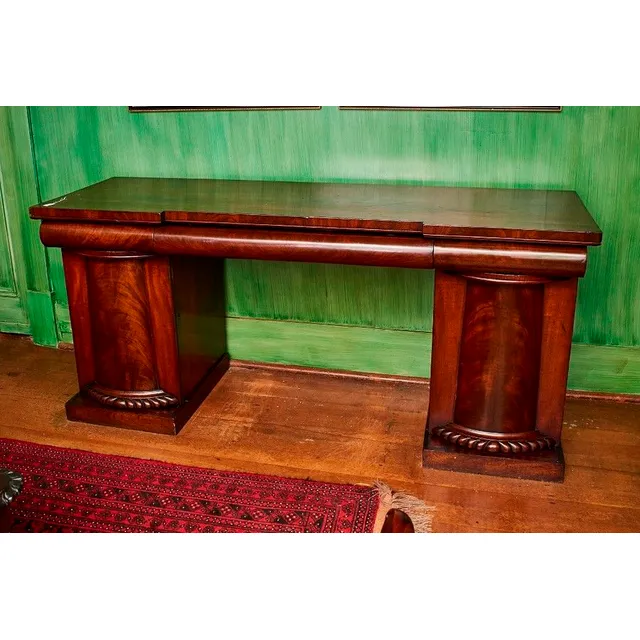
Georgian Cedar Pedestal Sideboard with Rounded Cushion Front Drawers
Georgian cedar pedestal sideboard, inverted breakfront outline with three rounded cushion front drawers above two cupboards with applied columns on gadrooned bases, height 93 cm width 205 cm depth 66 cm
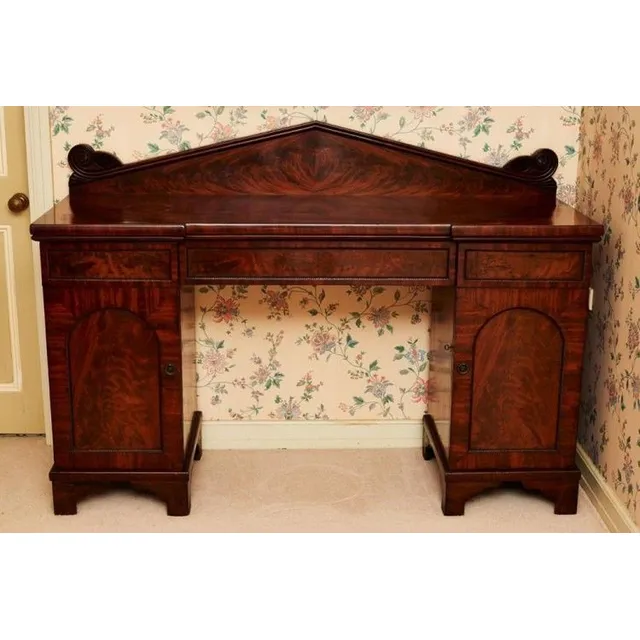
William IV Mahogany Double Pedestal Sideboard
William IV mahogany double pedestal sideboard, c. 1830, the triangular shaped back with moulded scrolling ends, above an inverted breakfront top, a long central beaded drawer flanked by two arch panelled cupboard doors with dummy drawers to the top,…
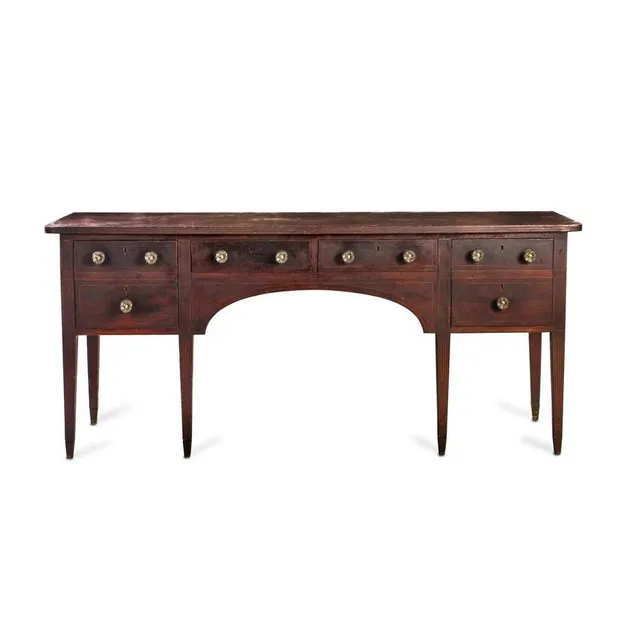
Colonial Cedar String Inlaid Sideboard, Hobart 1815
An important early colonial string inlaid cedar six-leg sideboard, Hobart, circa 1815, 93 cm high, 214 cm wide, 65 cm deep. Literature: Australian Furniture: Pictorial History and Dictionary, 1788-1938, Kevin Fahy and Andrew Simpson, Casuarina Press Ptd…
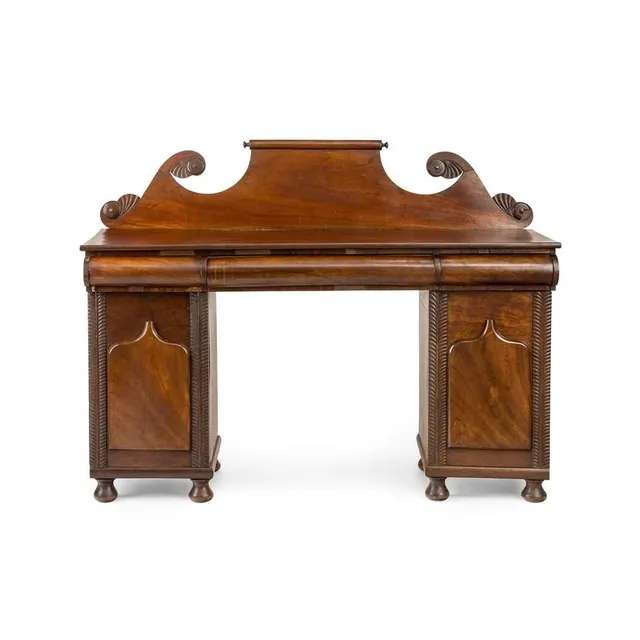
1830 Australian Cedar Pedestal Sideboard with Provenance
An Australian full cedar pedestal sideboard, circa 1830, the scrolled back with carved fan and applied roundel decoration above a rectangular top with one long and two short half round drawers, the two pedestals with raised panels between carved feather…
 Loading more...