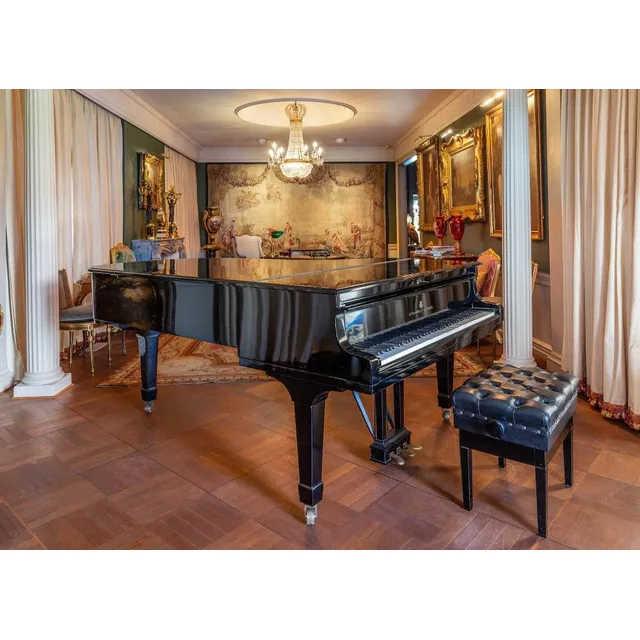
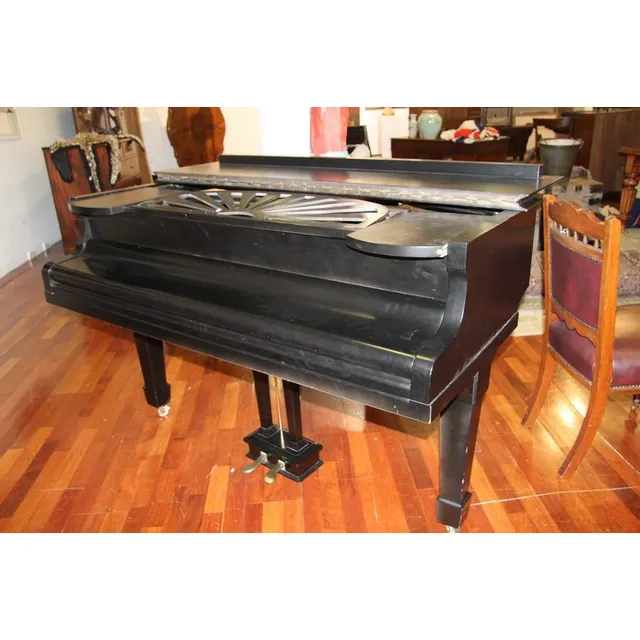
Hamburg Steinway Grand Piano, Ebonised, Excellent Condition
A Steinway of Hamburg ebonised grand piano, frame number B 433315, case number 259-93 216 cm long 148 cm wide, 100 cm high
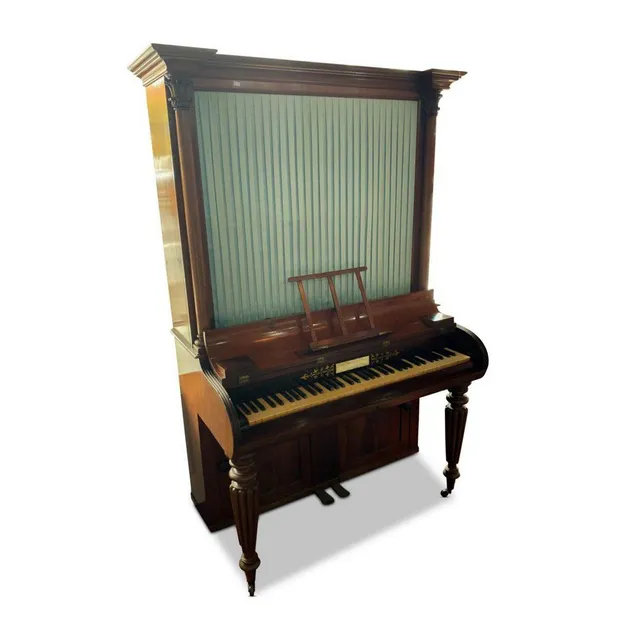
Regency John Broadwood Cabinet Piano
Regency John Broadwood cabinet piano, c.1820, in mahogany, rosewood and brass, with a pediment above a silk pleated panel, flanked by columns with carved foliate volutes, the front opening to reveal the hammers and strings, the hinged cover opening to…
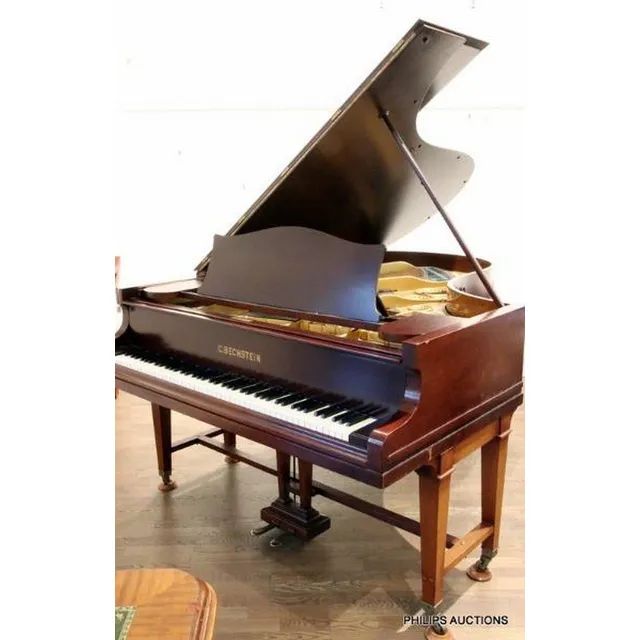
Bechstein Semi Concert Grand Piano, Rosewood, 1930
A Bechstein semi concert model C grand piano, Carl Bechstein, Berlin (1853-), Serial number 136217, supplied 1930The grand piano in a rosewood case, with full iron cast frame, ivory keyboard, hammerheads, raised on six square tapered legs to original…
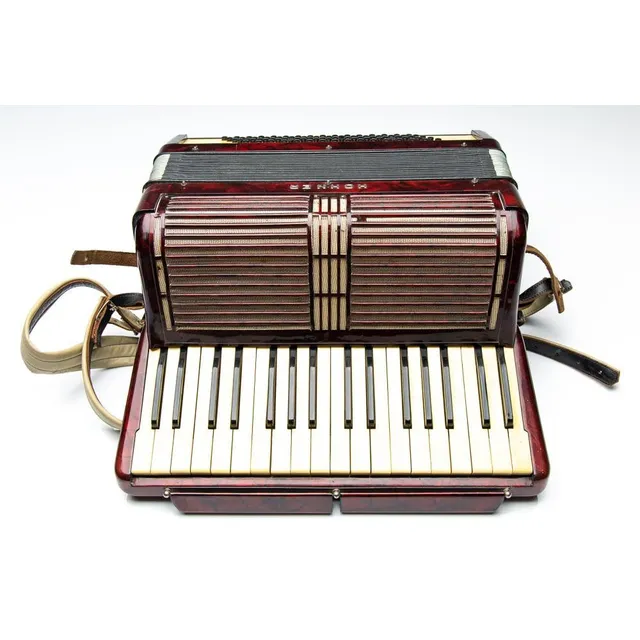
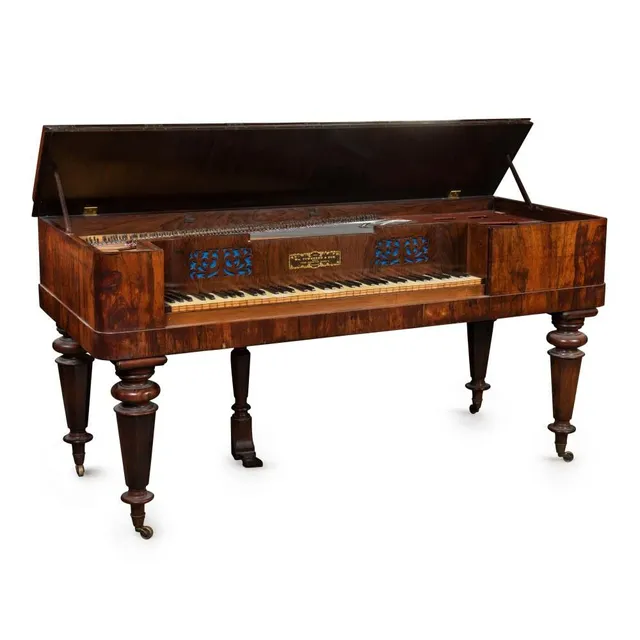
1830s Rosewood Square Piano by William Townsend
An antique rosewood square piano, circa 1830s, the table top piano numbered 2292 manufactured by Scottish maker, William Townsend; with label for 'W.M Townsend from Sebastien Erard London', 91 cm high, 182 cm wide, 75 cm deep
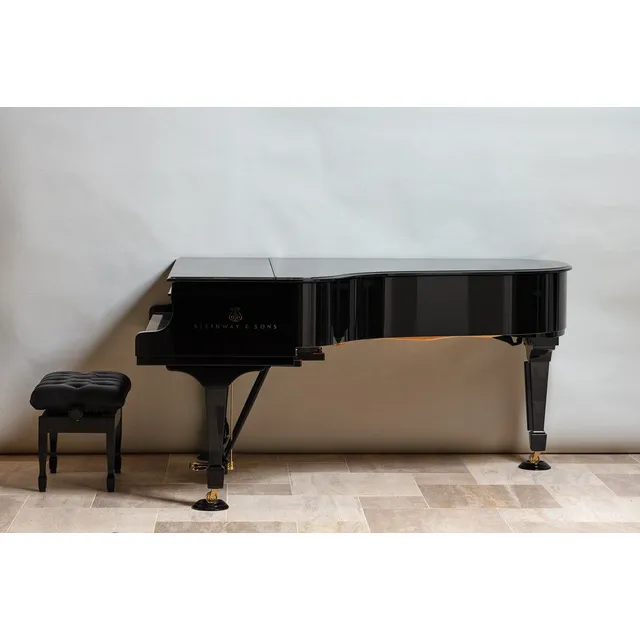
Steinway Spirio R: The Perfect Piano with Revolutionary Technology
Steinway & Sons, B-211 Spirio R grand piano, in black finish complete with two piano stools, 1480 (width)mm x 2110 (length)mm; 354 kilograms weight. Other Notes: Steinway and Sons is the benchmark in the construction of grand pianos of the highest quality…
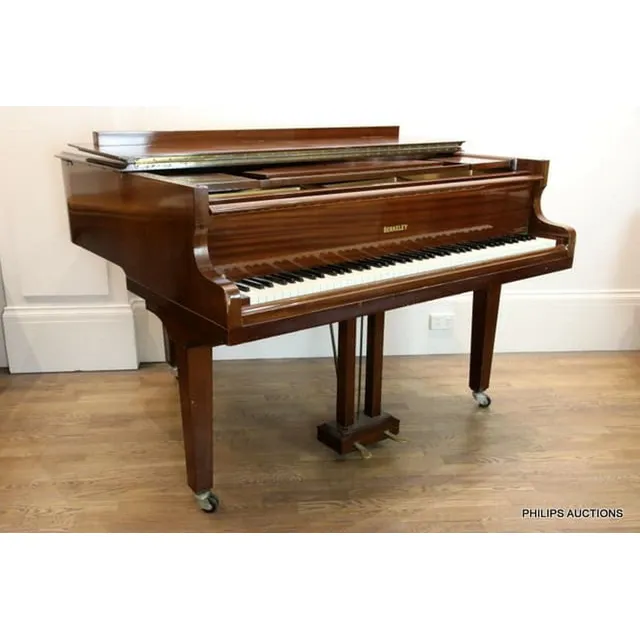
Berkeley Baby Grand Piano with Stool
A Berkeley mahogany cased baby grand piano, numbered K105452, together with a hardwood piano stool, height 102 cm, length 140 cm, width 139 cm
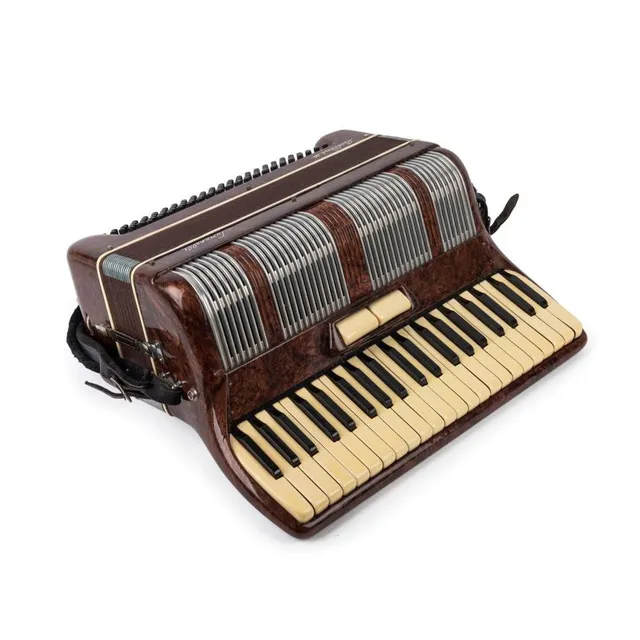
Vintage Italian Piano Accordion with Case
Lerenelli Bellini III vintage Italian piano accordion in case, mid 20th century
Collard & Collard Walnut Baby Grand Piano
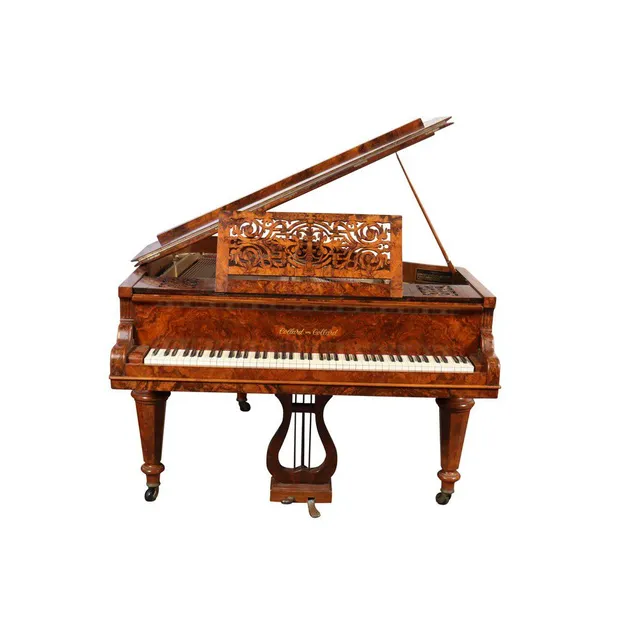
Baby grand piano by Collard & Collard, c1885 walnut with scrolled fretwork design and octagonal tapered legs no 128316 with certificate of authenticity plaque, height 96 cm, width 140 cm, depth 165 cm
Restored 1922 Bechstein Grand Piano with Stool
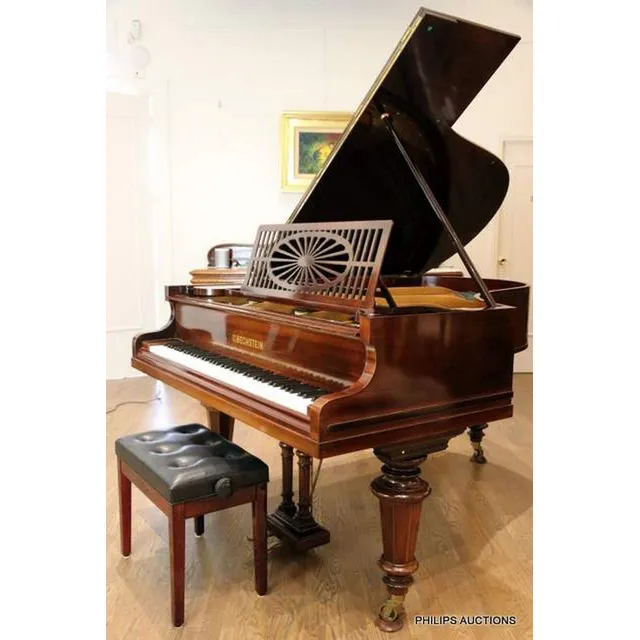
A mahogany Bechstein grand piano with stool, 1922, serial number 119679, a fully restored A1 model 182 cm, piano with 85 keys having a lustrous mahogany case and tapering faceted legs, with original paper label, stencilled serial number and trademark…
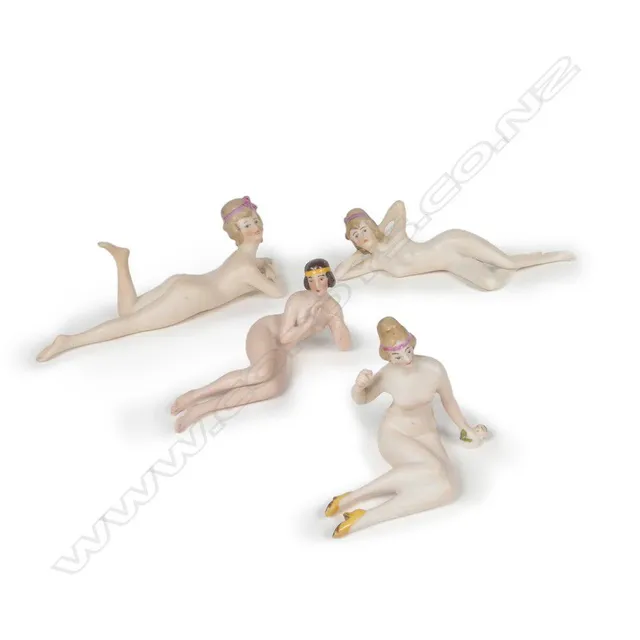
Bisque Piano Bathing Beauties Set
Four early 20th century bisque piano bathing beauties, in various reclining poses. Longest 14 cm.
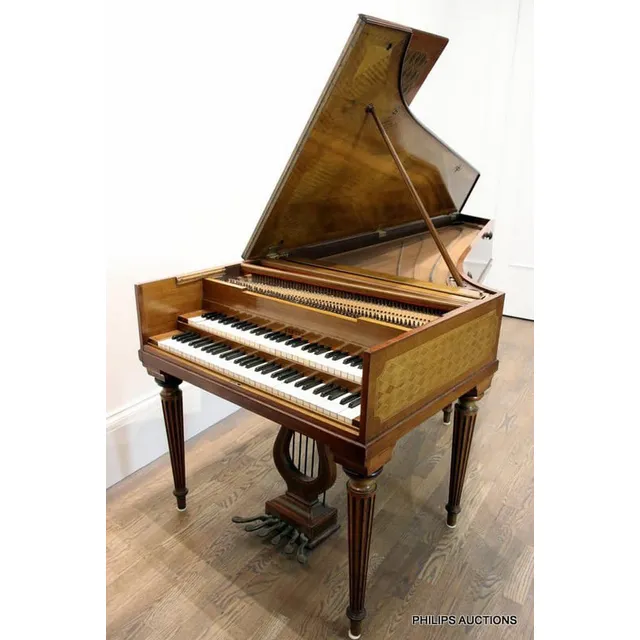
Landowska's Pleyel Harpsichord, 1905
An important Pleyel double manual revival harpsichord, 1905, France, serial number #22F823, with a marquetry case and lyre post with six pedals, provenance: formerly the property of Polish harpsichord virtuoso Wanda Landowska 1905-1907 and played by her…
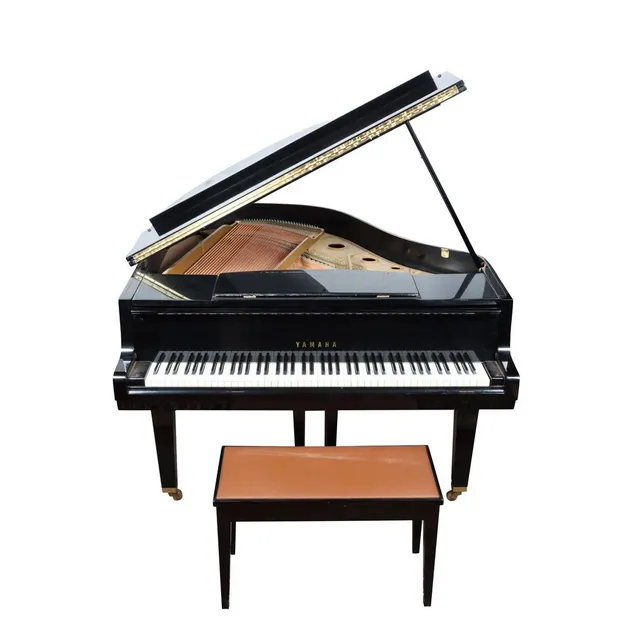
Yamaha Baby Grand Piano with Stool - Nippon Gakki
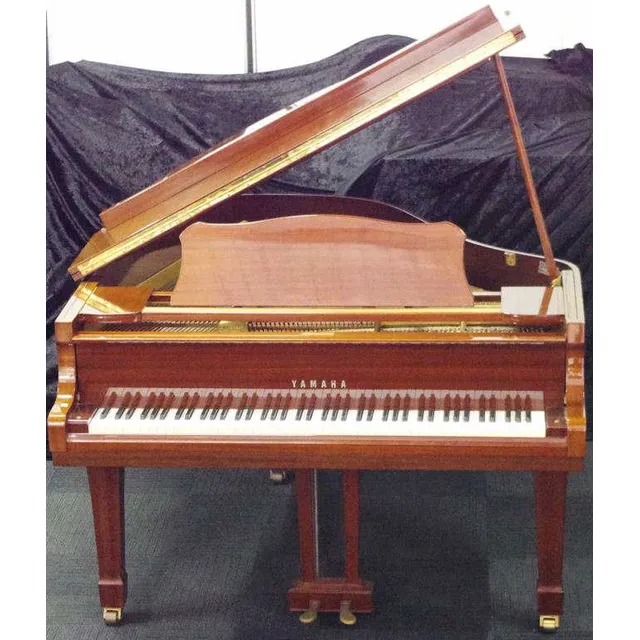
Yamaha baby grand piano model Gi Nippon Gakki, made in Hamamatsu Japan, includes stool, Serial number 1913465, height 100 cm, length 145 cm, depth 160 cm
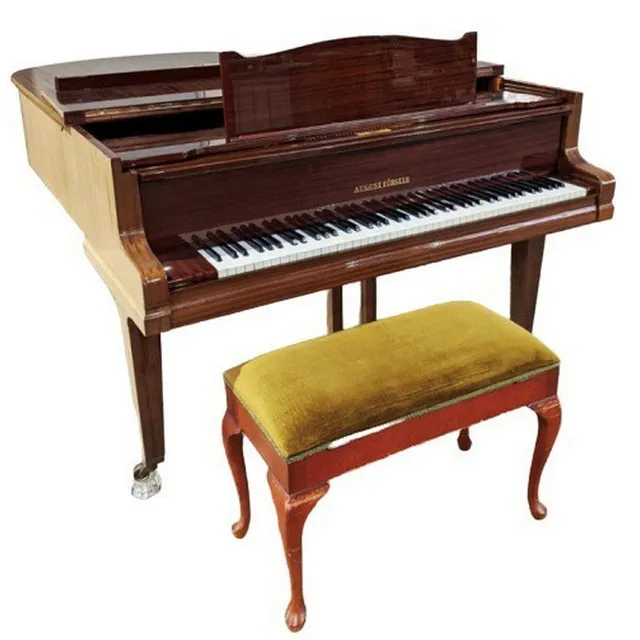
Mahogany Boudoir Grand Piano by August Forster
An August Forster boudoir grand piano, model 170, with two tone veneered mahogany finish. Length 170 cm
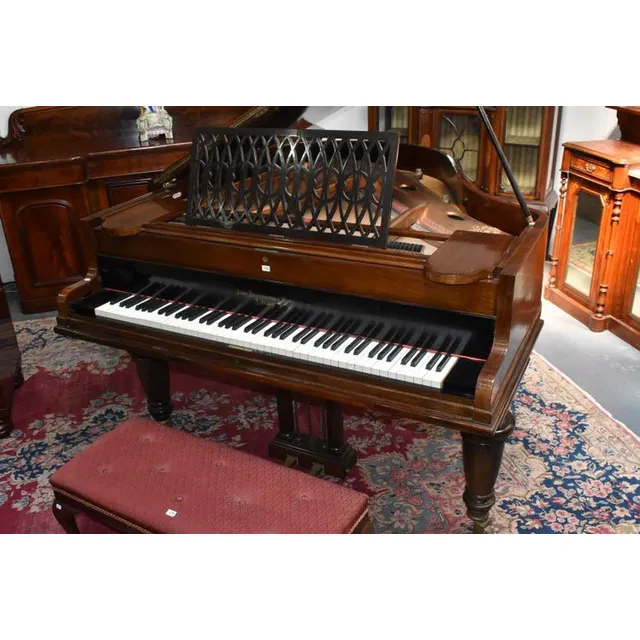
John Broadwood and Sons Baby Grand Piano, London
A baby grand piano by makers John Broadwood and Sons, London
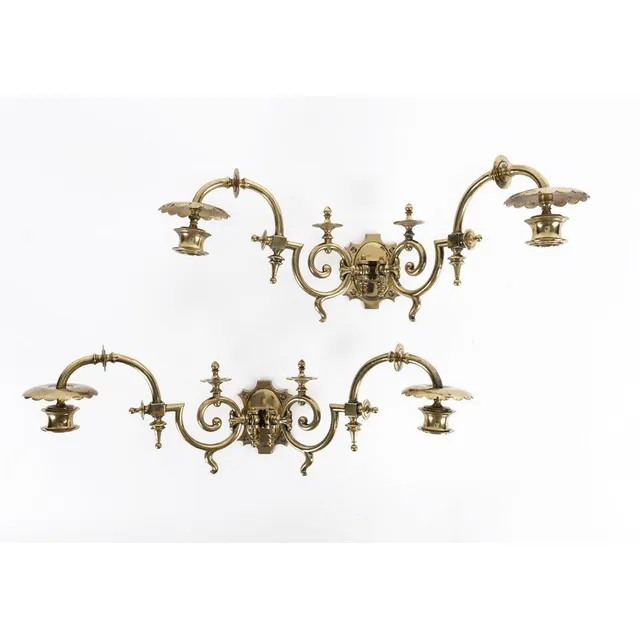
19th Century Cast Brass Piano Scones (Pair)
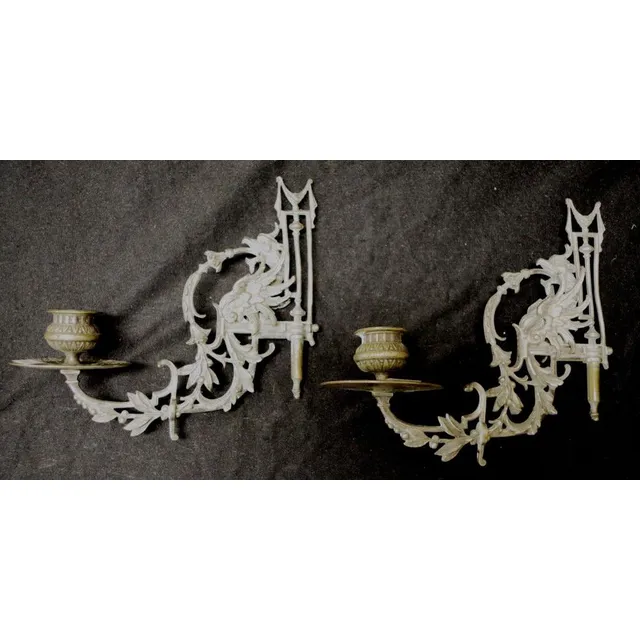
A pair of two branch piano scones, cast brass, 19th century, 27 cm deep
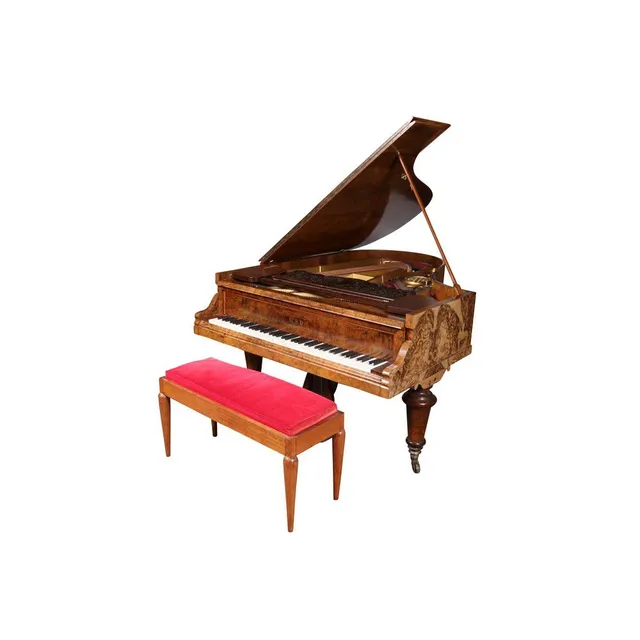
Antique Burr Walnut Baby Grand Piano with Stool
Baby grand piano faded burr walnut, by Kaps in Dresden, with stool, 1878, no. 4142, Resonator piano, height 96 cm, length 190 cm, depth 144 cm
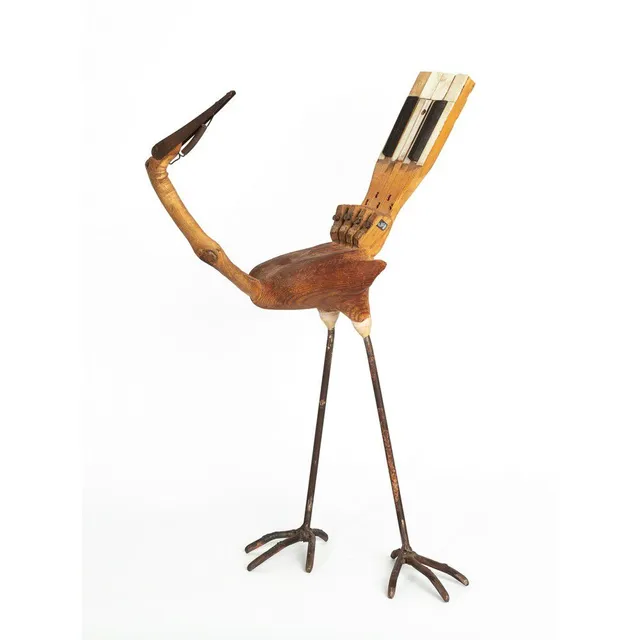
Southern Piano Bird
Randall Sinnamon, Southern piano bird, circa 2004, mixed media including piano keys, height 65 cm, ex. Robin Gibson
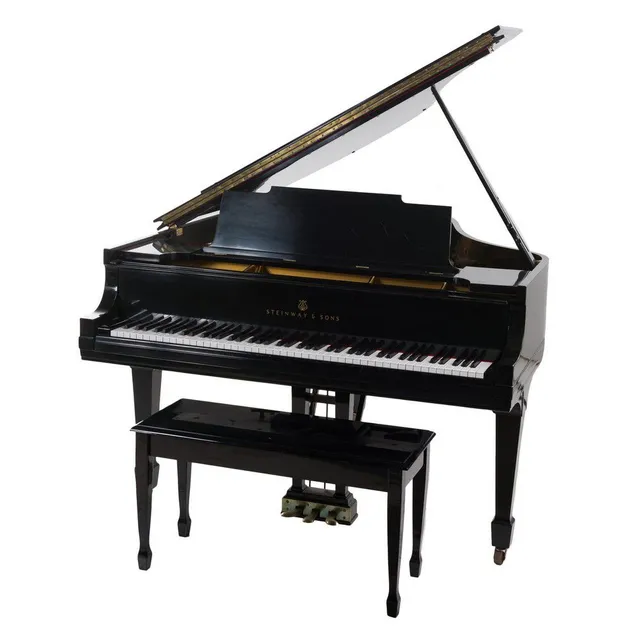
Steinway & Sons Baby Grand Piano, 1931 Model M
A baby grand piano Steinway & Sons model M, Serial number 271 194, New York, circa 1931, the cast iron plate bearing the maker mark and serial number. Approximately 275kg 170 cm long, 148 cm wide
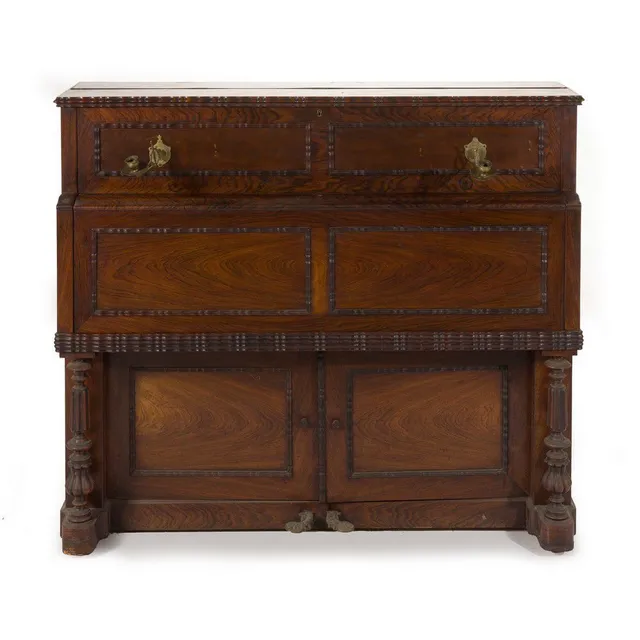
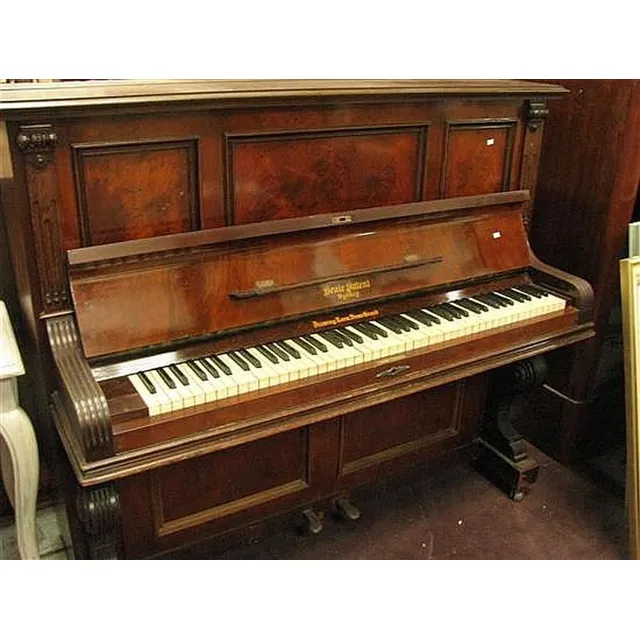
Antique Rosewood Upright Piano, Melbourne 19th Century
Upright piano, stamped R. J. Paling, model number 2, serial number 5585, Melbourne, 19th century, the rosewood case, comprising a folding keyboard, double brass sconces to the upper front board, the gilded plaque to the inside of the lid reads 'W.H. Glen…
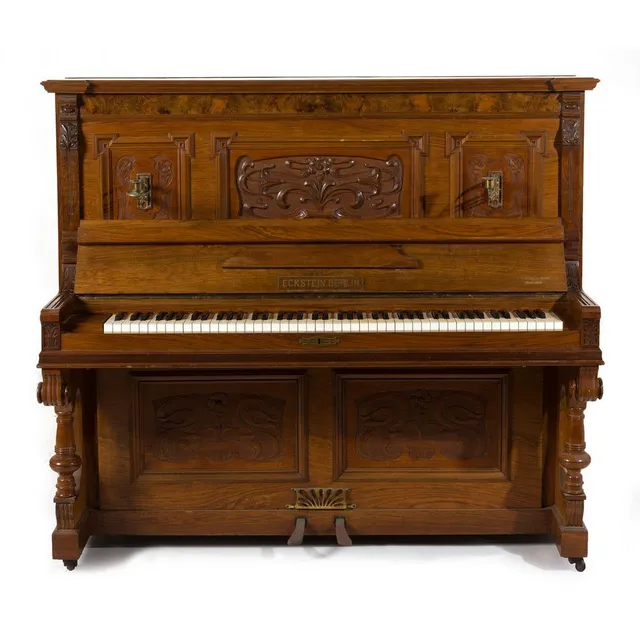
Art Nouveau Upright Piano by Eckstein Berlin
German Art Nouveau upright piano, by Eckstein Berlin, Berlin, circa 1900s, in walnut and burr walnut, iron frame, comprising over seven octaves, inset with carved relief Art Nouveau panels, and double brass sconces to the upper front board, 135 cm high,…
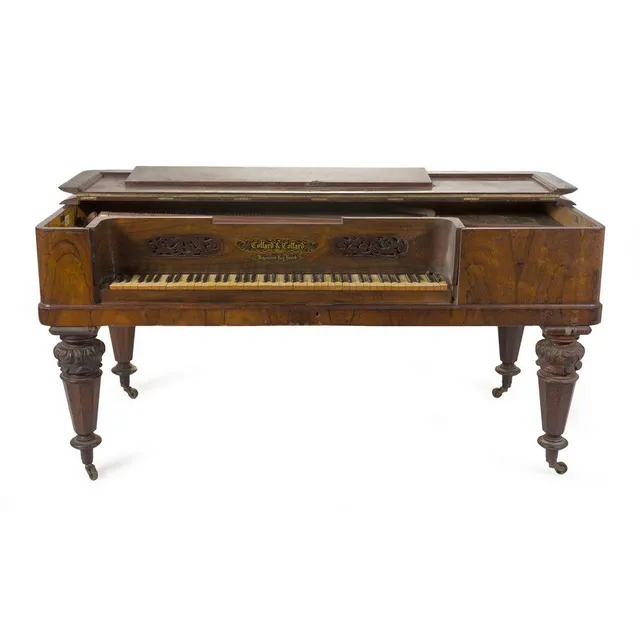
William IV Rosewood Square Piano by Collard & Collard
A William IV rosewood square piano, by Collard & Collard, London, circa 1835, the rounded rectangular case, comprising six and half octaves, fretted decoration, raised on four carved tapered legs, label to interior reads 'Imported and sold by /Joseph…
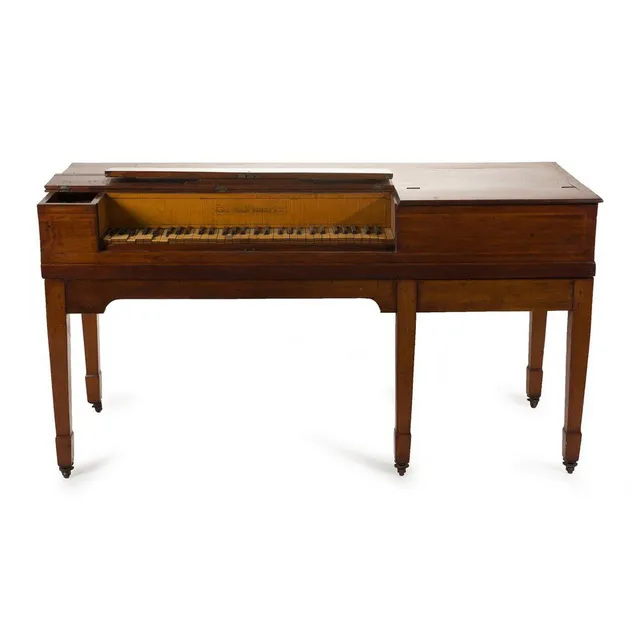
Andrew Rockhead's Scottish Square Piano, 1800
Scottish square piano, by Andrew Rockhead, Edinburgh, circa 1800, the rectangular case in mahogany and satinwood, comprising five octaves, raised on five square tapered legs with spade feet on castors, 86 cm high, 159.5 cm wide, 56.5 cm deep
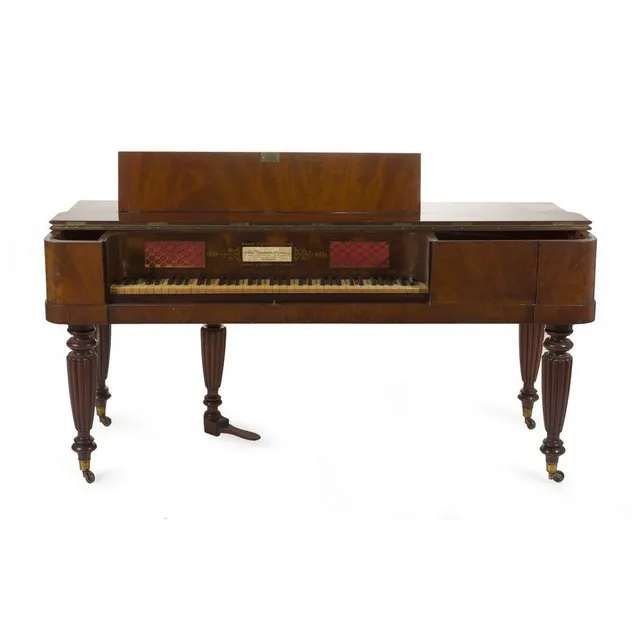
Antique English Square Piano with Brass Inlay
English square piano, by John Broadwood and Son, London,19th century, rounded rectangular case in mahogany, comprising six octaves and a sustain pedal, decorated in cut brass inlay and fretting, raised on four fluted legs on castors, 86 cm high, 177 cm…
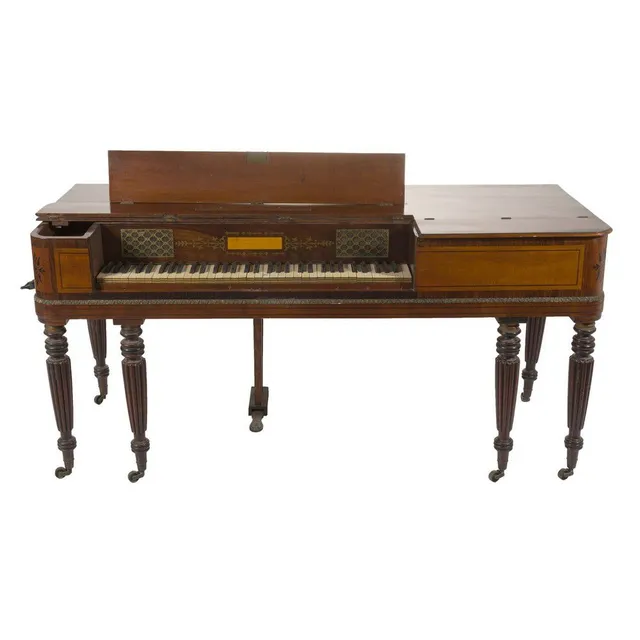
Broadwood Square Piano in Rosewood and Satinwood
English square piano, by John Broadwood and Sons, London, circa 1820, the rectangular case with rounded edges, in rosewood and satinwood, comprising five and a half octaves and a sustain pedal, decorated with brass fretwork, string inlay to the rounded…
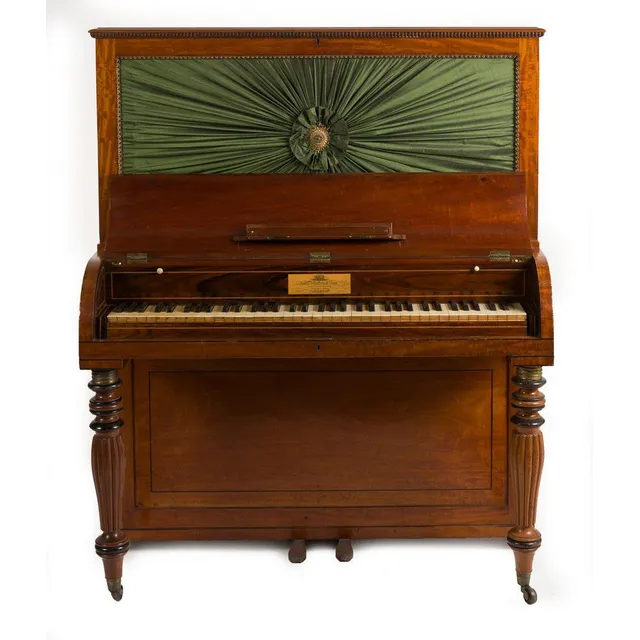
Antique London Upright Piano by John Watlen & Son
English upright piano, by John Watlen & Son, London, 19th century, the rolled front lid comprising six octaves, supported on two fluted front legs, the upper front panel stretched in an olive green silk, 136.5 cm high, 115.5 cm wide, 52.5 cm deep
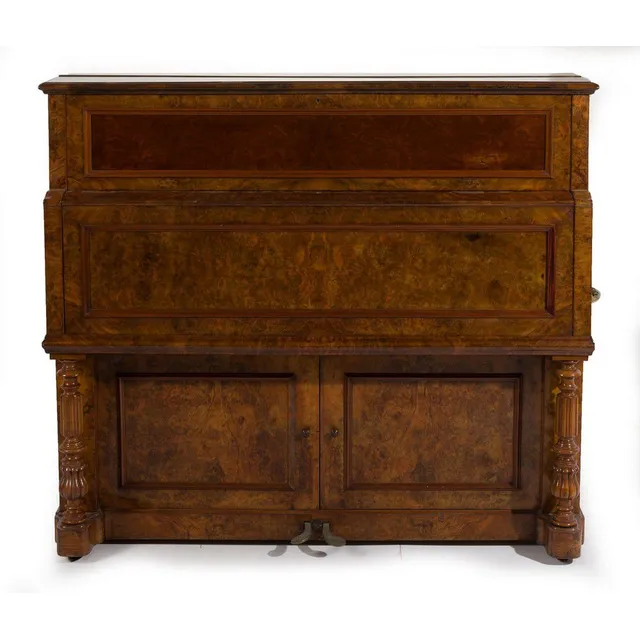
Aucher Brothers Burl Walnut Piano, Paris 1850
French upright piano, by Aucher Brothers, Paris, circa 1850, in burl walnut, with folding keyboard, comprising seven octaves, the key board supported by two carved columns, above the keyboard inscribed in cut brass 'Aucher Brothers/ prize Medals/…
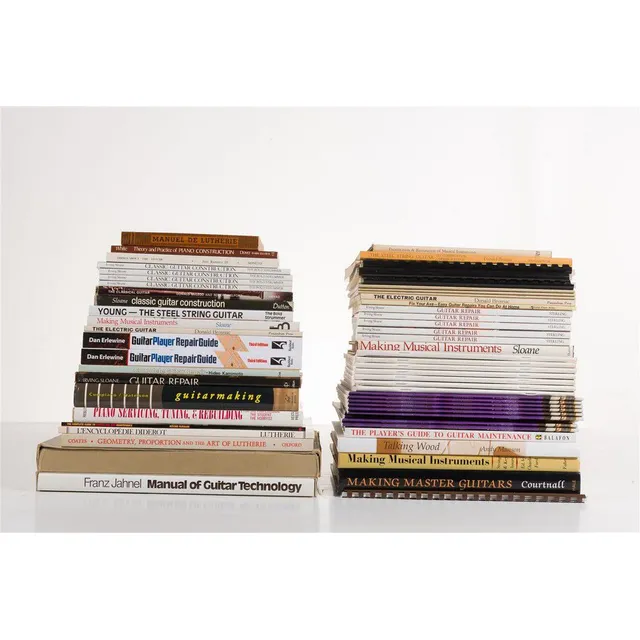
Crafting Musical Instruments: Construction and Maintenance
A collection of books on musical instrument construction and Maintenance, including guitar Making, Making musical Instruments, and piano Servicing, building and Retuning
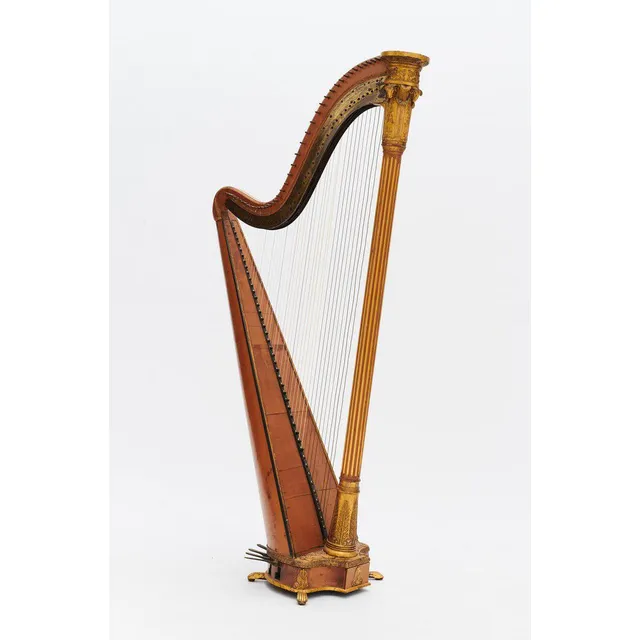
French Empire Harp by Sebastian Erard, 19th Century
A French Empire maple giltwood and gesso concert harp, early 19th century, by Sebastian Erard, with seven pedals and 42 strings, the brass plate with engraved inscription: 'Erard Freres - Parbrevet Dinvention - Facteurs de forte piano & de Harpes du Roi -…
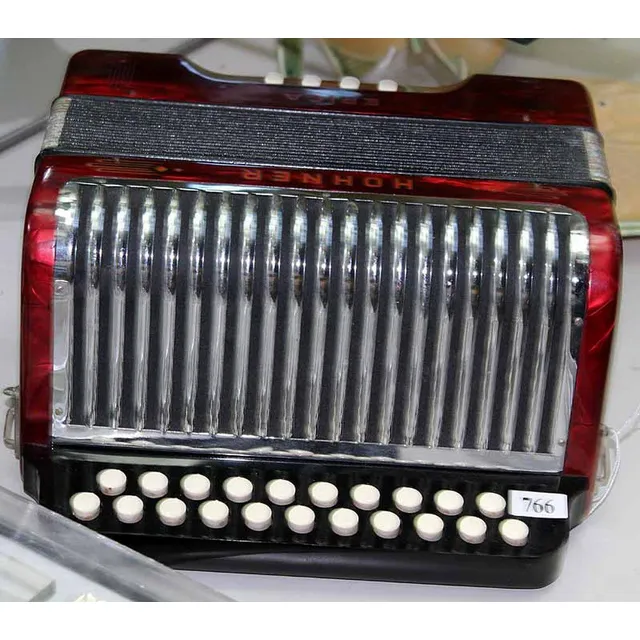
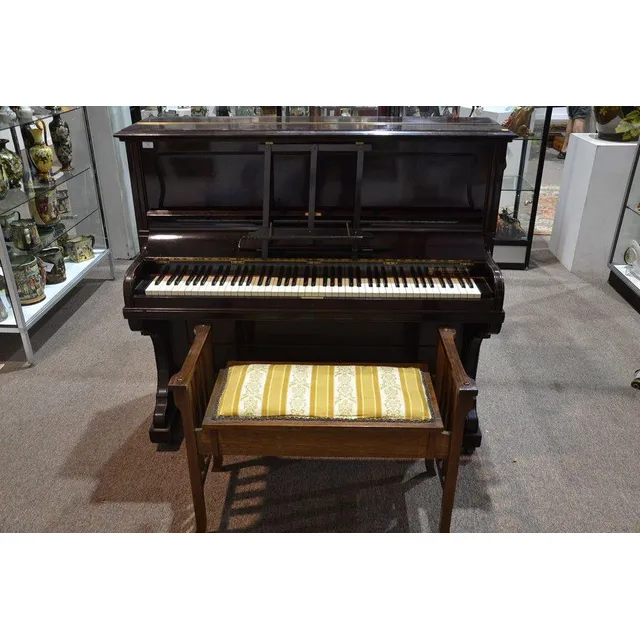
1885 John Brinsmead & Sons Upright Piano
Upright piano John Brinsmead & Sons, London. Iron framed 354023 - 49757. Circa 1885
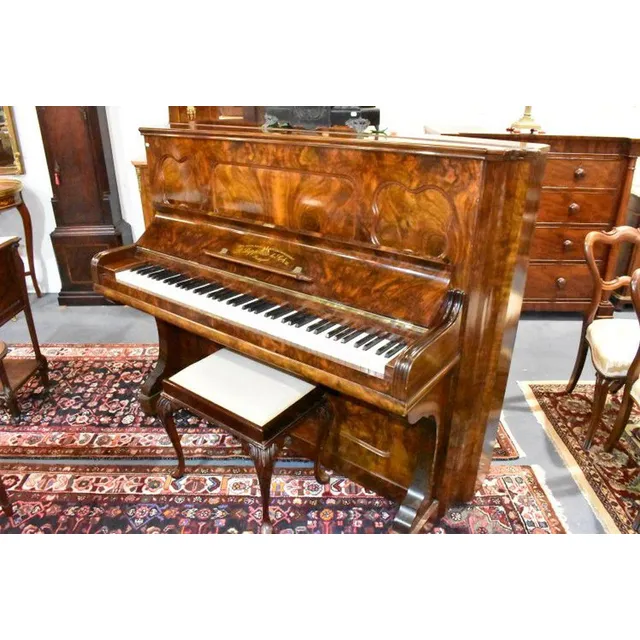
19th Century Walnut Upright Piano by R. Lipp & Sohn
A 19th century walnut upright piano by R. Lipp & Sohn, iron framed
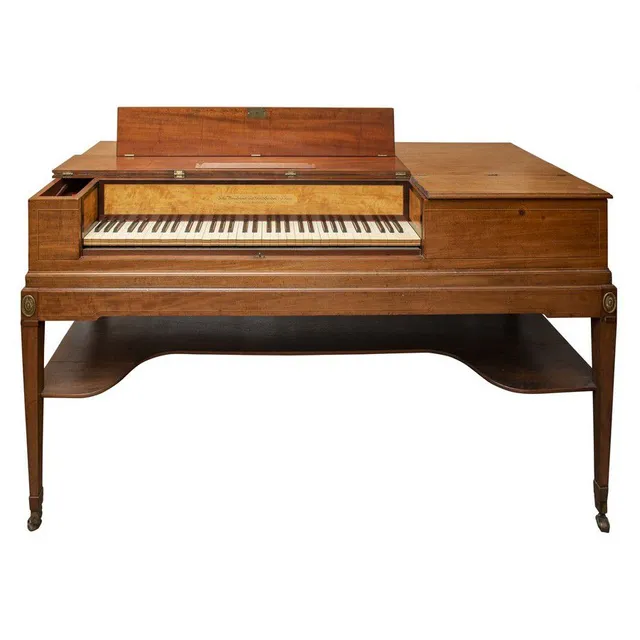
George III Mahogany Square Piano by John Broadwood & Son
A fine George III mahogany-cased square piano, John Broadwood & Son, marked 'John Broadwood & Son, London, great Pulteney Street, 1798 Patent', the Neo-Classical case and recessed under-tier raised on tapering share-section supports terminating in brass…
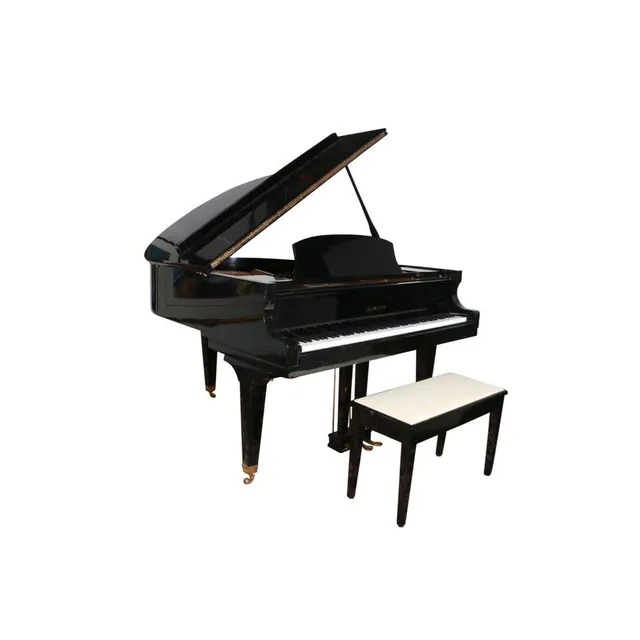
Howard Black Baby Grand Piano by Baldwin - 143x161cm
Baby grand piano Howard black, by Baldwin, length 143 cm depth 161 cm
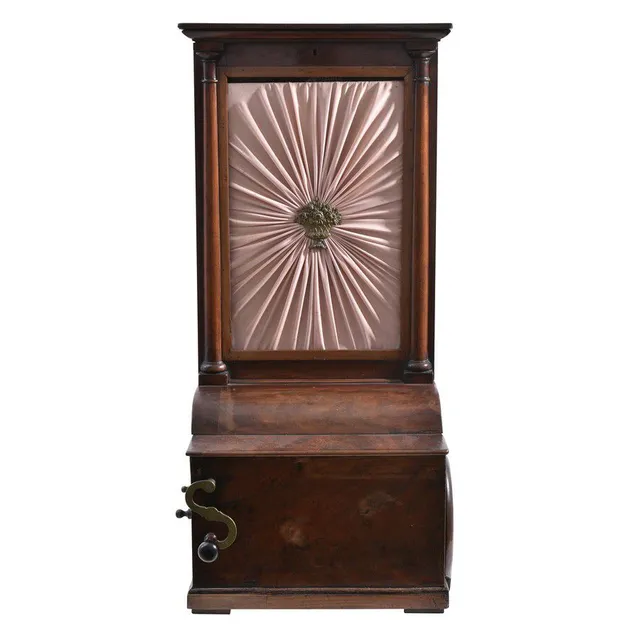
1930 Mahogany Barrel Piano Forte
A model barrel piano forte, circa 1930, twenty two note format, in an upright mahogany case with a brass 'S' formed crank, 93 cm high, 42 cm wide, and 35 cm deep
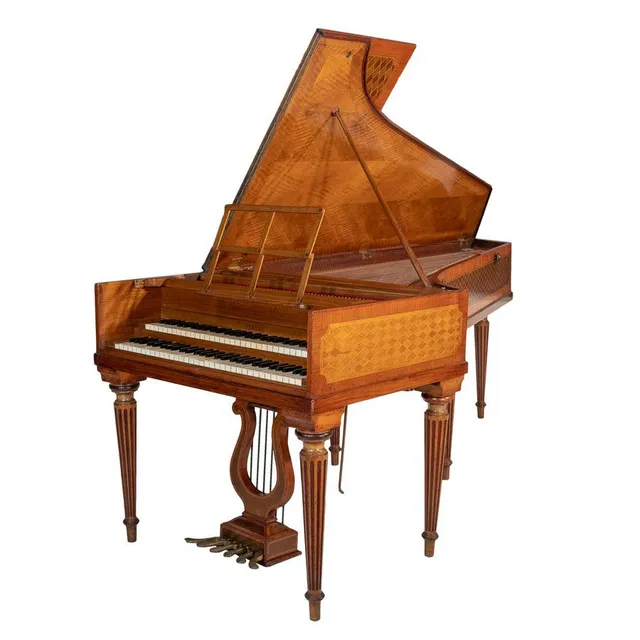
Landowska's Pleyel Harpsichord, 1905
Important Pleyel double-manual harpsichord, 1905, property of Wanda Landowska 1905-7, Serial #22F823. This particular Pleyel was exhibited in the pianoforte Past at Sydney's Queen Street Galleries in the 1970s, and was pictured in the catalogue as item…
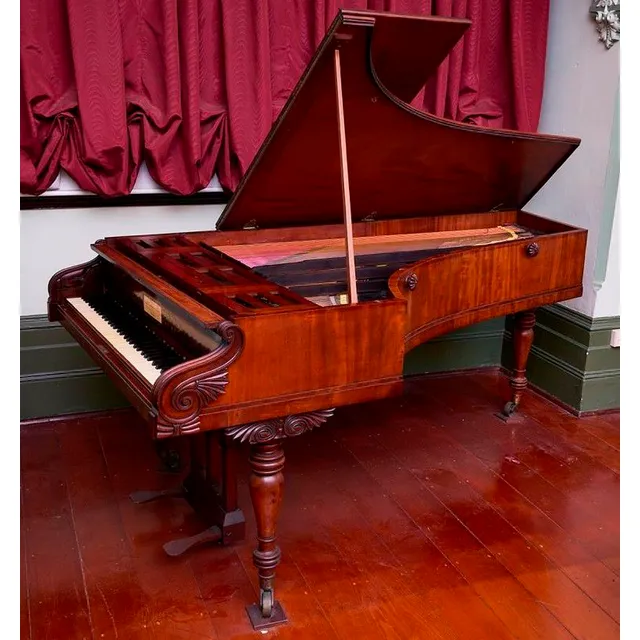
1832 Broadwood Grand Piano with Inlaid Brass Decoration
John Broadwood & Sons, London, grand piano forte, no. 500, c. 1832, with ivory and ebony sharps, the mahogany case with brass inlaid decoration and carved scrolling leaves, on lobed baluster legs, makers plate engraved 'Makers to their Majesties and the…
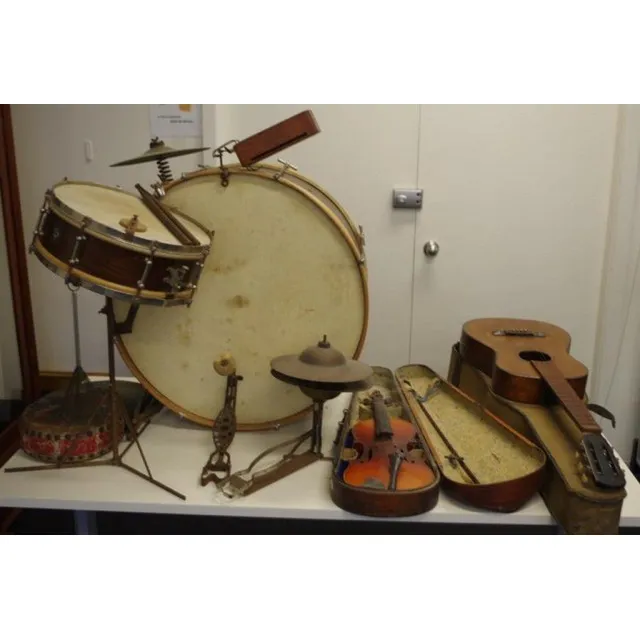
Chica Gilbert's 1930s Dance Band Instruments
1930s Chica Gilbert's Dance Band instruments, comprising of a Leedy Reliance drum kit with accessories, a bongo drum, violin and hand made acoustic guitar (a/f). Chica Gilbert's Dance Band had Charles ('Çhica') Gilbert As Drummer, Jack Ward on Piano and…
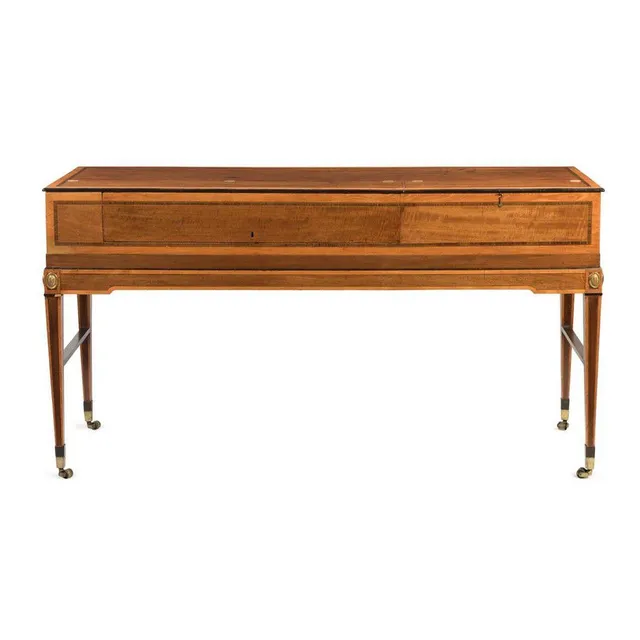
Mahogany Parquetry Pianoforte Table by John Broadwood & Son
A parquetry inlay mahogany square table pianoforte made by John Broadwood & Son., 1792, 86 cm high, 159 cm wide, 54 cm wide
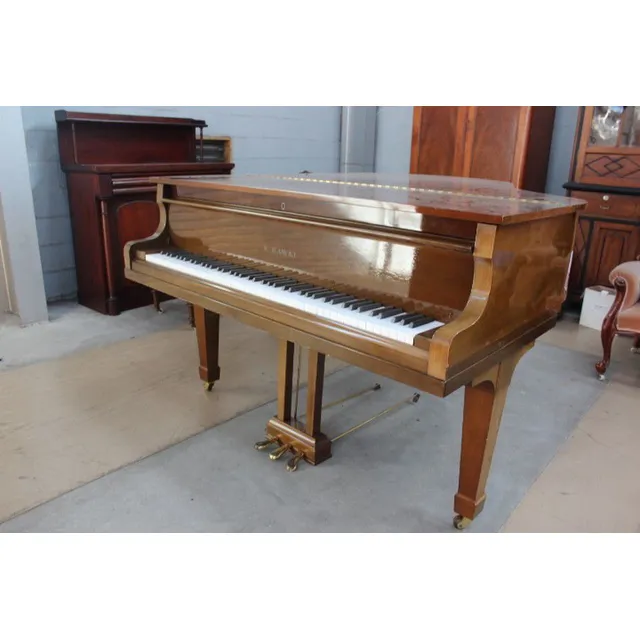
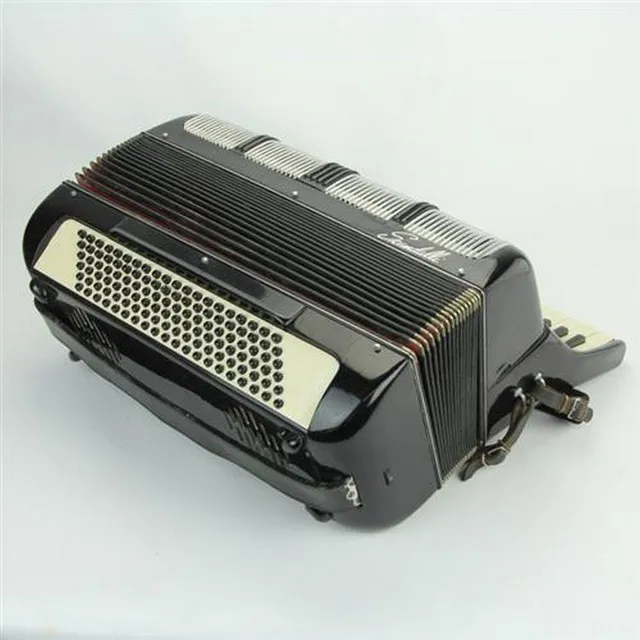
Scandalli Piano Accordion with 41 Keys and Case
Scandalli piano Accordian having forty-one keys, in a fitted velvet lined case, width 49 cm
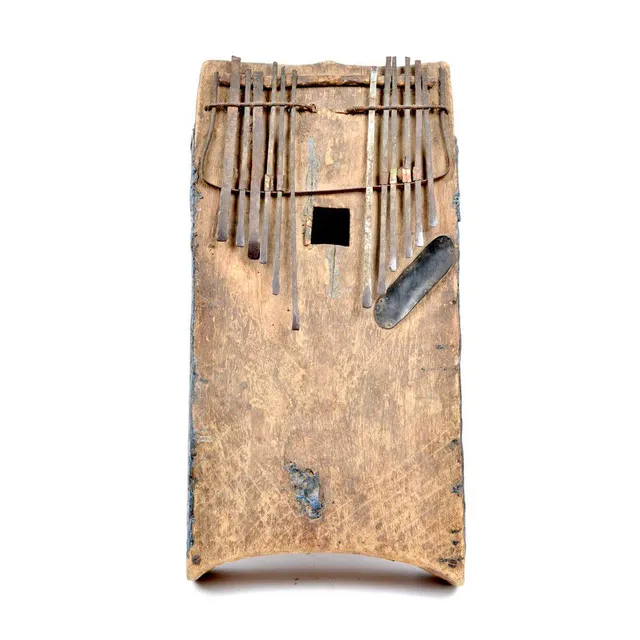
Angola Sanza: Carved Thumb Piano, 62cm Height
Angola sanza, large carved hollow Sanza or Thumb piano, height 62 cm
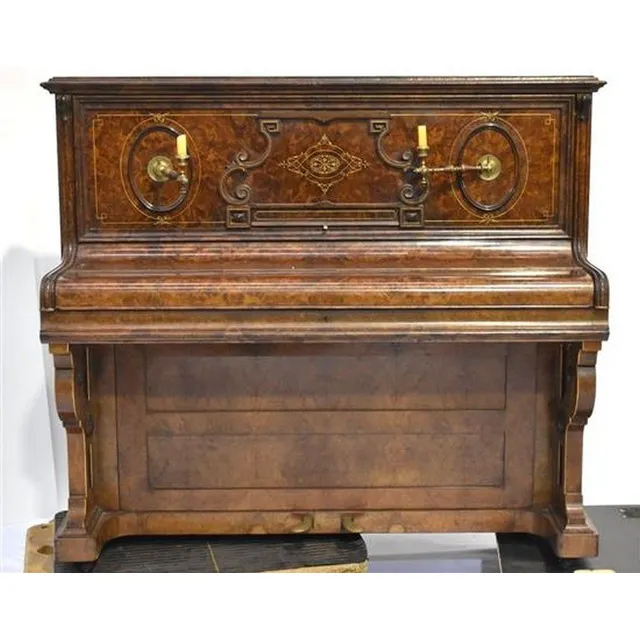
1890 Burr Walnut Upright Piano by Brinsmead & Sons
A John Brinsmead & Sons burr walnut Upright piano, c.1890, with original sconces in overall excellent condition
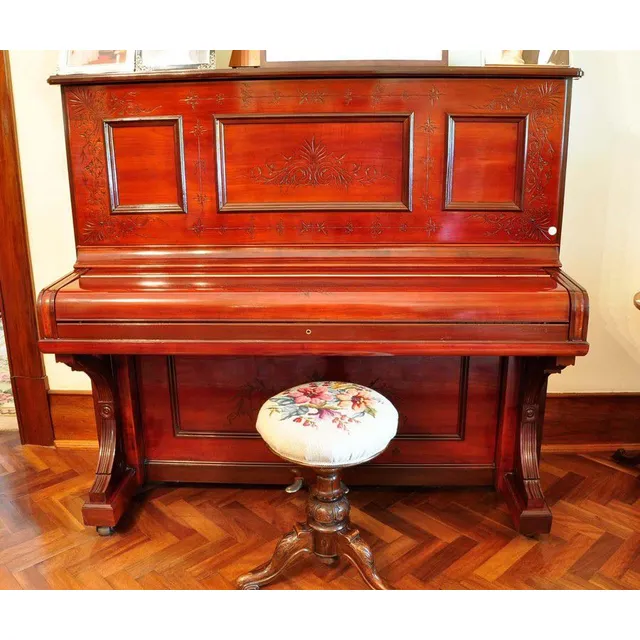
Mahogany Steinway Upright Piano - Late 19th/20th Century
A Steinway & Sons mahogany cased upright piano, late19th/20th century, 140 cm high, 156 cm wide, 72 cm deep
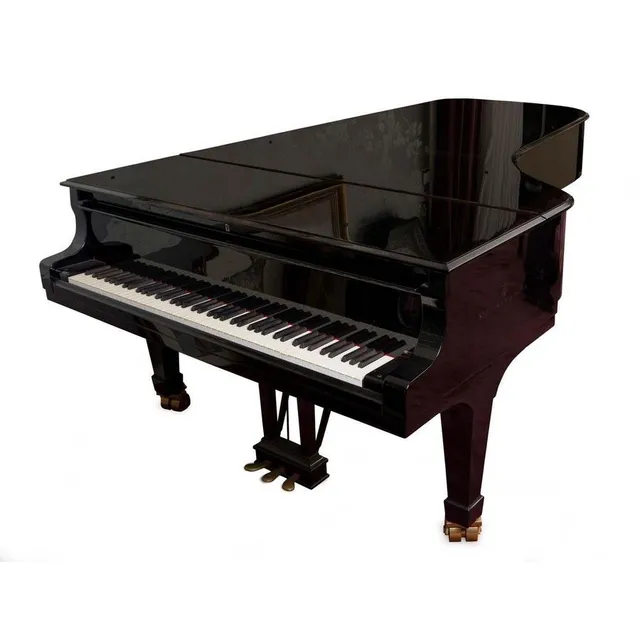
Ebonised Steinway & Sons Concert Piano (272 cm)
An ebonised Steinway & Sons concert piano, length of the case 272 cm
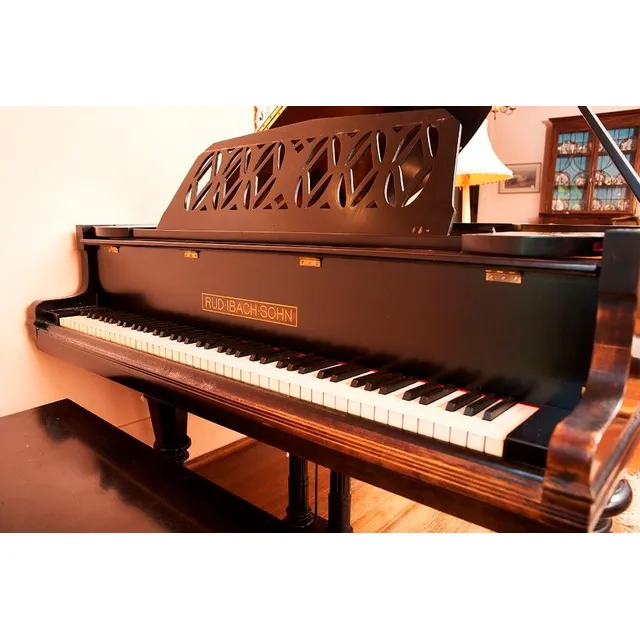
Rud Ibach Sohn Grand Piano with Stool
Rud Ibach Sohn, grand piano, ebonised case, together with ebonised piano stool, piano requires tuning (2), height 97 cm width 151 cm depth 167 cm
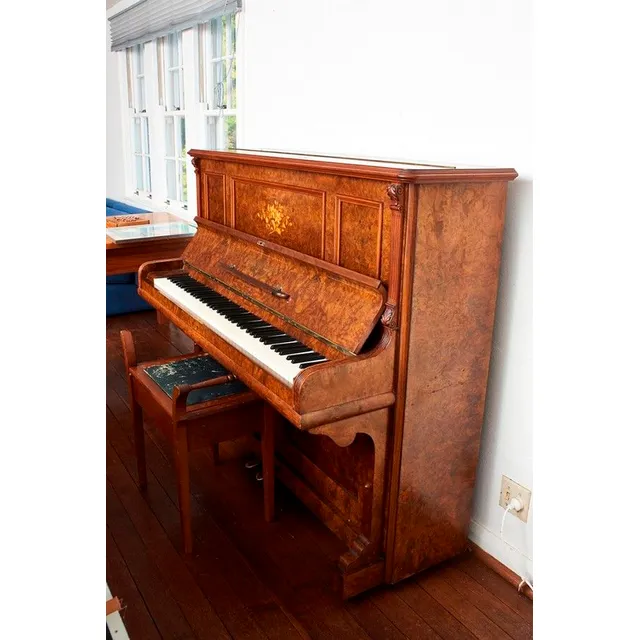
Burr Walnut Upright Piano by Schiedmayer, c. 1900
Schiedmayer, piano Forte Fabrik, Stuttgart, burr walnut Upright piano, c. 1900, with inlaid decoration
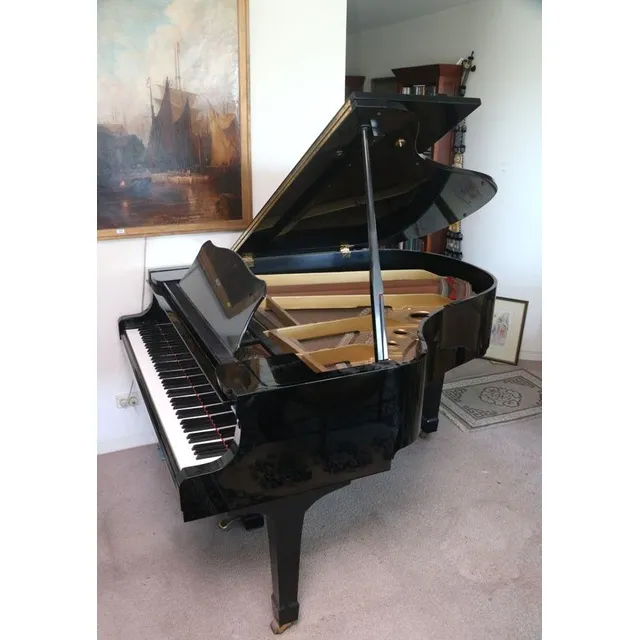
Richard Divall's Personal Yamaha Baby Grand Piano (G2)
A Yamaha baby grand piano, model number G2, registration number J3730455, for many years this served as the personal piano of the late Richard Divall
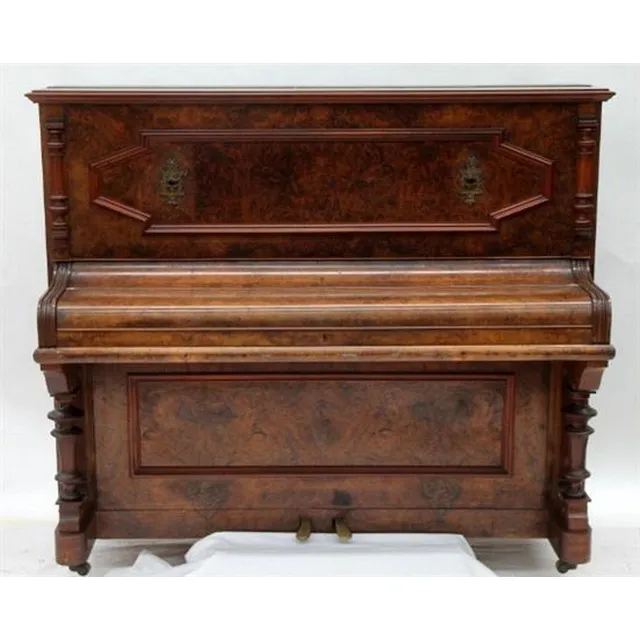
Late Victorian Burr Walnut Upright Piano by Karl Weber
A Karl Weber, Germany, late Victorian burr walnut Upright piano, with steel frame, 131 x 156 x 66 cm
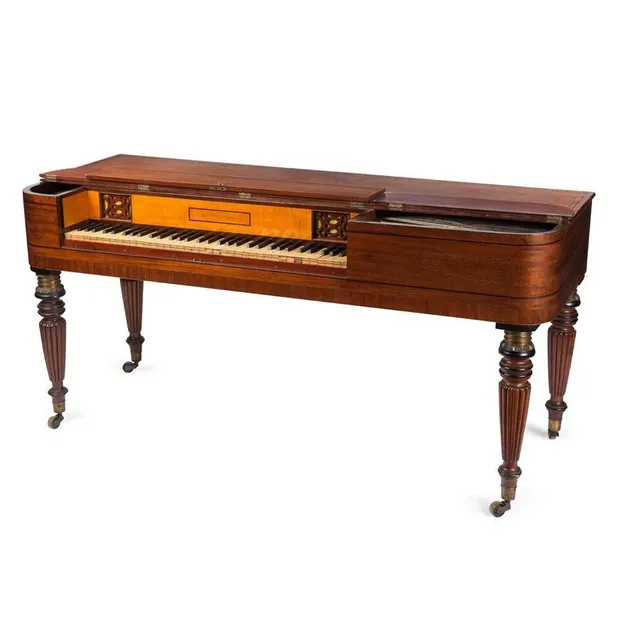
Antique Mahogany Square Pianoforte by John Broadwood & Son
A mahogany square table pianoforte made by John Broadwood & Son., circa 1,800, 83 cm high, 169 cm wide, 62 cm deep
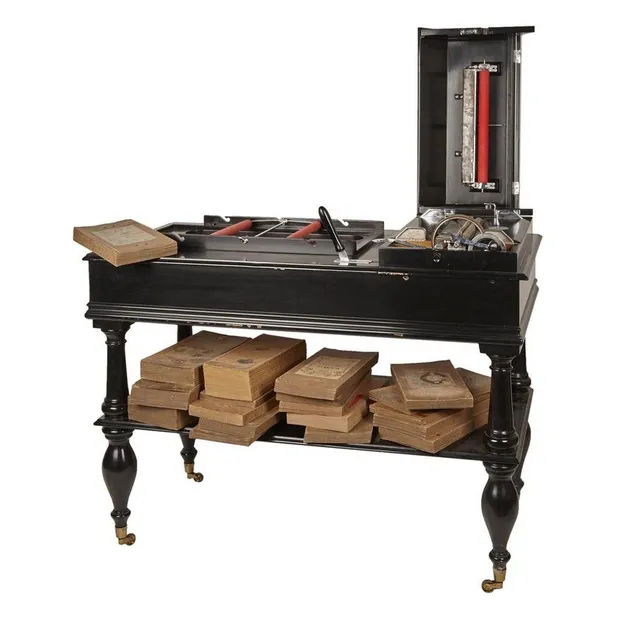
Edwardian Racca Piano Melodica with Card Books
An Edwardian 'Racca Piano Melodica' with card books C. 1910, black lacquer with turned legs and bookshelf, brass castors, working. Dimensions 80 cm x 10 cm x 4 cm.
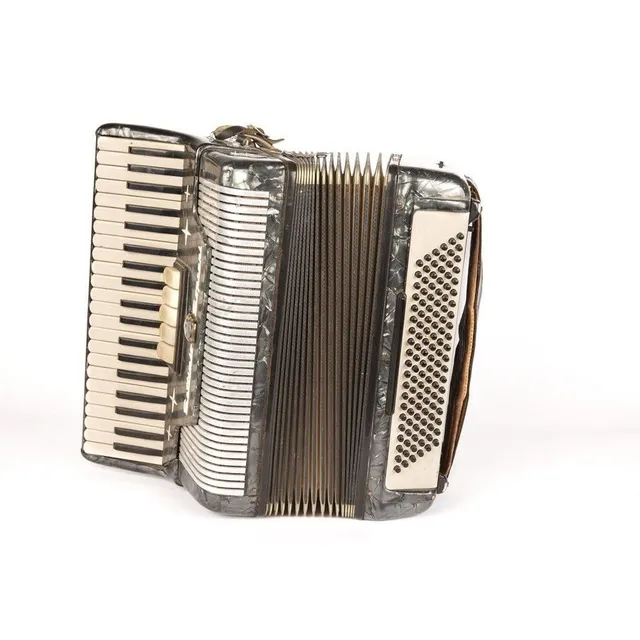
Silver Grey Settimio Soprani Piano Accordion
An Italian 'Settimio Soprani' piano Accordion, with silver grey mottled plastic cover. Width 48 cm.
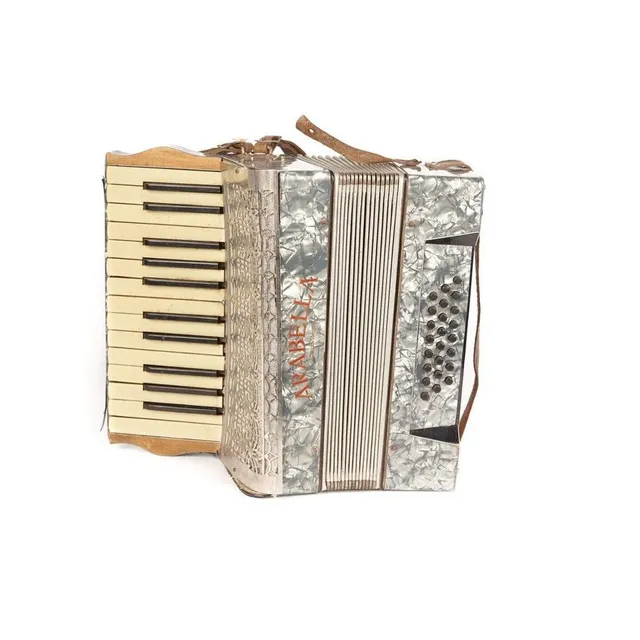
Restoration Project: German Arabella Piano Accordion
A mid-sized German Arabella piano accordion, silver grey plastic, body in need of restoration.
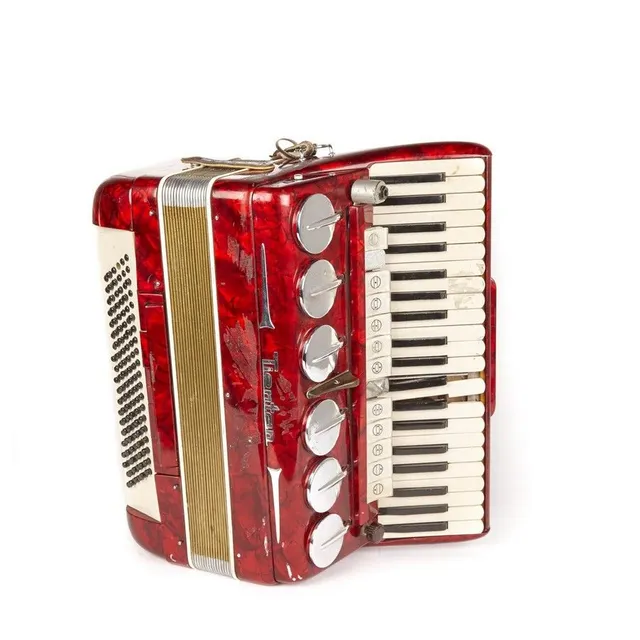
Mottled Red Tientan Piano Accordion (Key Covers Missing)
A mottled red plastic Tientan piano Accordion, some key covers missing. Width 51 cm
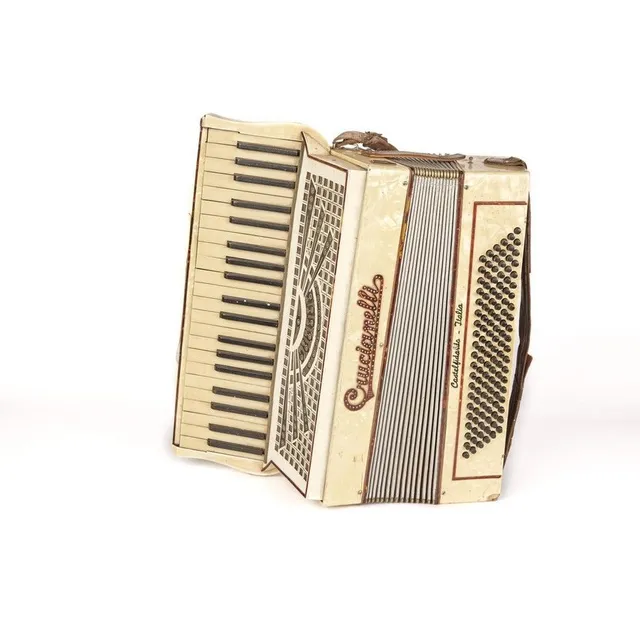
Cream Crucianelli Piano Accordion, 53cm Width
An Italian Crucianelli piano accordion, in cream lustre plastic with minor loses. Width 53 cm
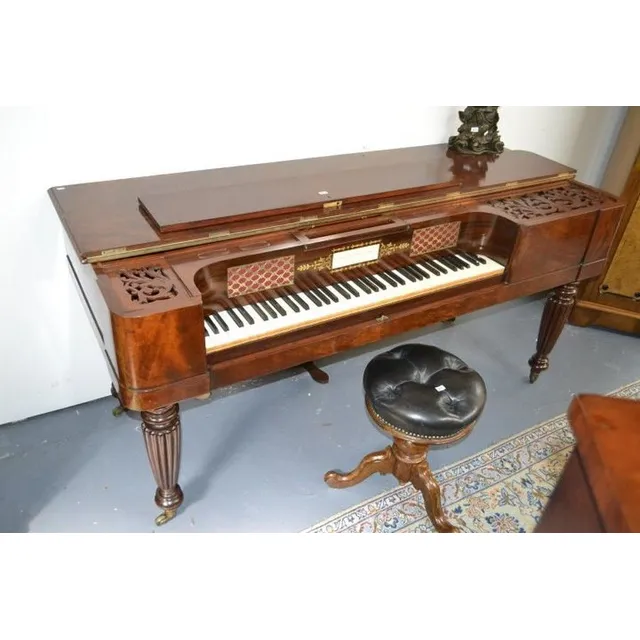
Antique Broadwood & Sons London Piano
Early 19th century English 'table-top' piano by John Broadwood and Sons-London
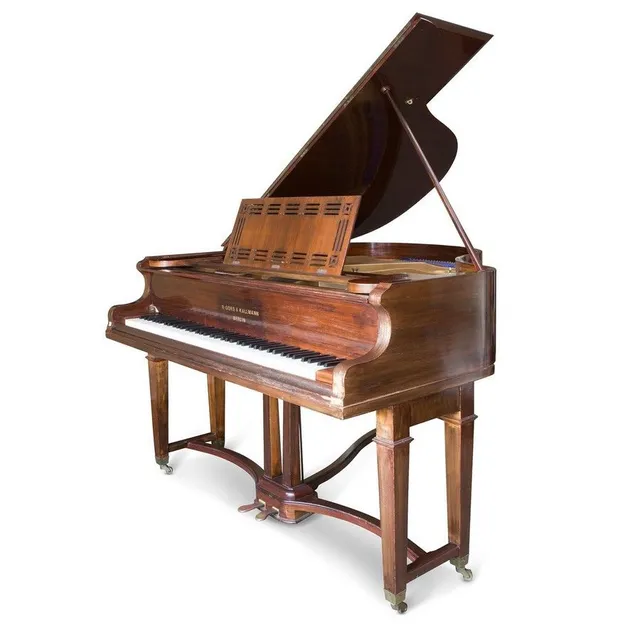
R. Gors and Kallmann Baby Grand Piano with Stool
A baby grand piano by R. Gors and Kallmann, Berlin, accompanied by stool
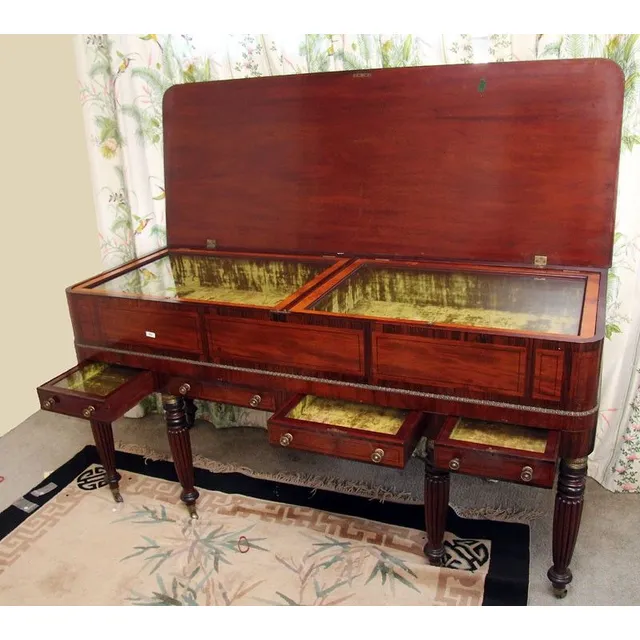
Mahogany and Rosewood Spinet Piano with Glazed Doors
An early 19th century mahogany and rosewood spinet piano case fitted with glazed hinged doors.
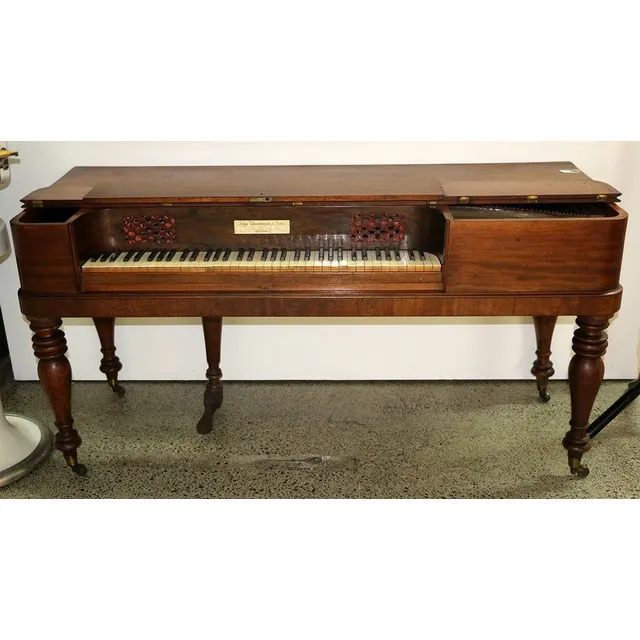
Georgian Mahogany Pianoforte by John Broadwood & Sons
Georgian mahogany pianoforte, by John Broadwood & Sons, raised on turned legs with brass casters. Provenance: from Mollies Boutique hotel, Auckland
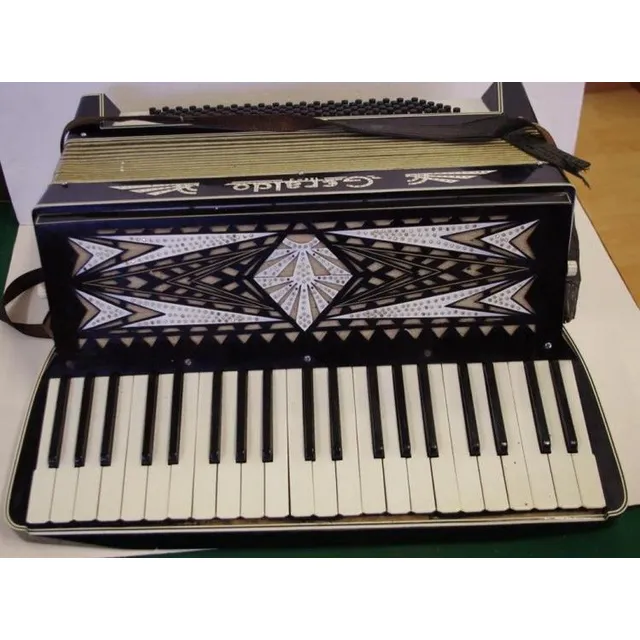
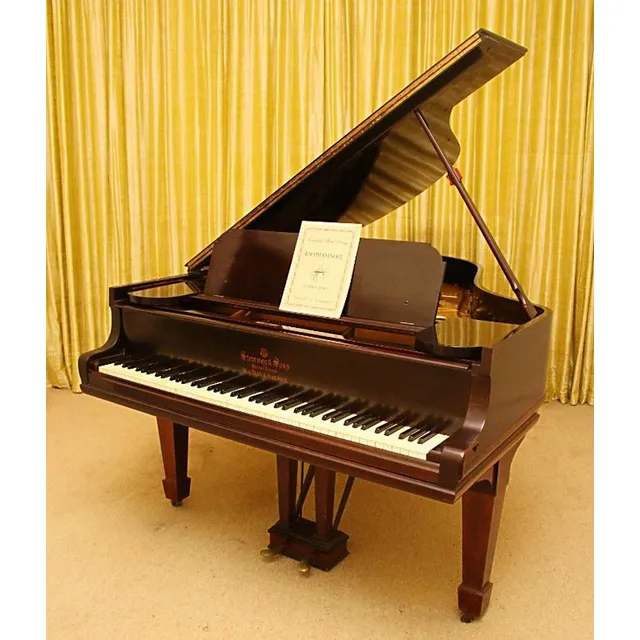
1917 Mahogany Steinway Boudoir Grand Piano, Model O
Steinway boudoir grand piano, model O, 1917, manufactured in Hamburg in mahogany case. Number 186659
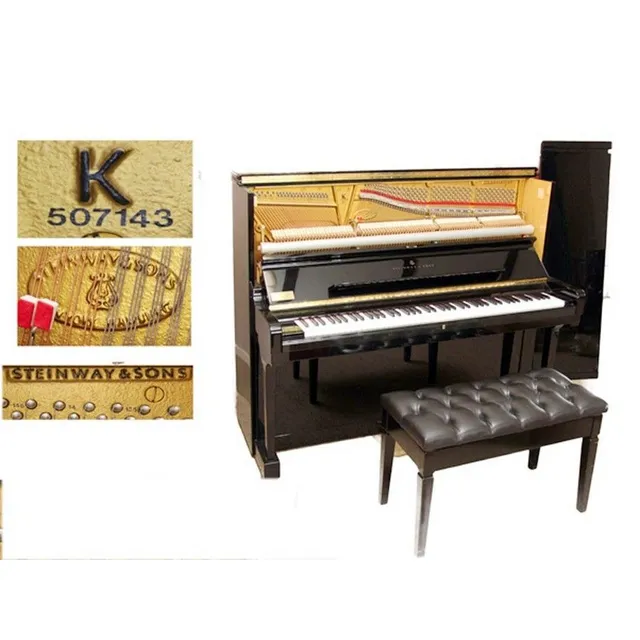
Steinway & Sons Upright Grand Piano with Jansen Bench
A Steinway & Sons upright grand ebony satin finish piano with Jansen bench. Model K 507143, purchased Allans Melbourne 1990, ticket price $37,500. Has Original receipt and manuals, together with tuning records
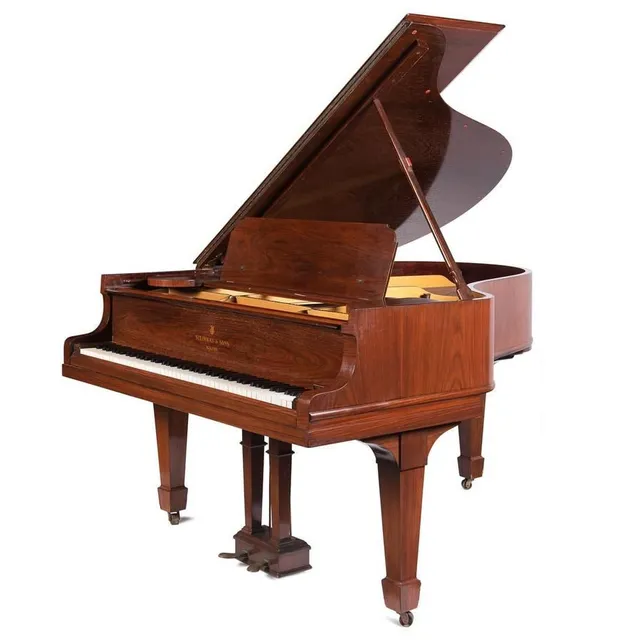
Antico's Steinway Baby Grand Piano, 1911
A Steinway & Sons mahogany baby grand piano, 1911, with ebonised and simulated ivory keys, serial no. 151664, 180 cm long. Provenance: The Collection of Sir Tristan and Lady Antico, Sydney
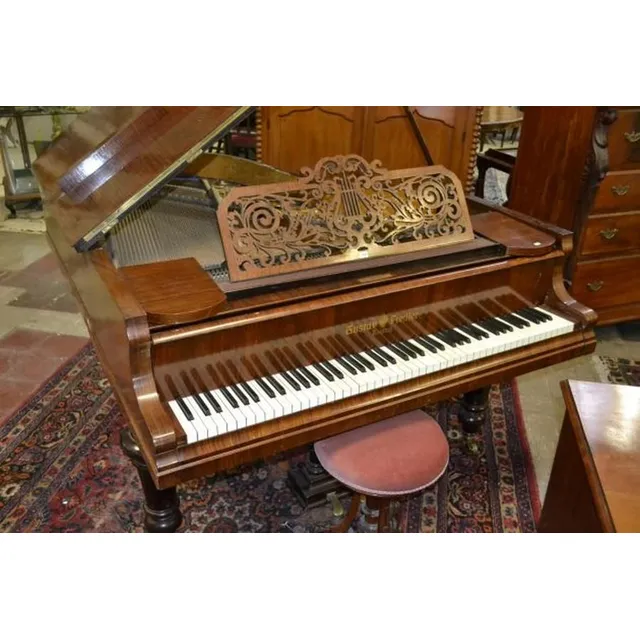
Gustav Fiedler-Leipzig Mahogany Grand Piano
19th century German mahogany mid-size grand piano by Gustav Fiedler-Leipzig
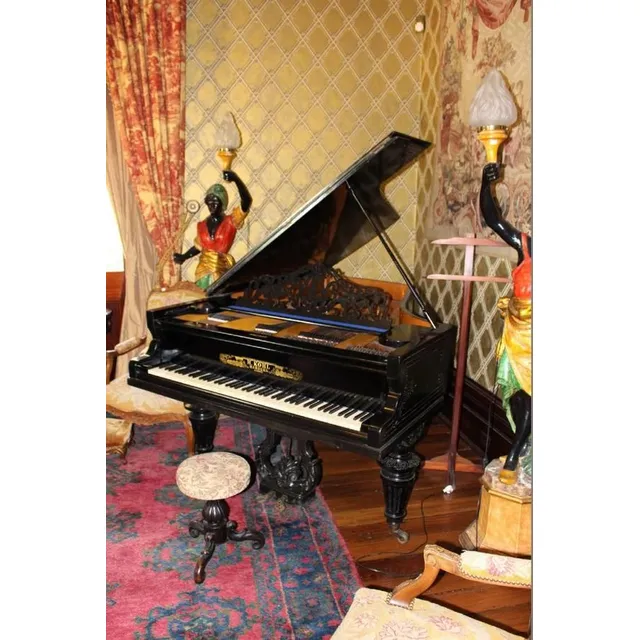
Antique Grand Piano in Good Working Order
Antique grand piano, Goldene Medaillen fur Kunst & Wissenschaft, H Kohl, Hamberg, ebonized, good working order
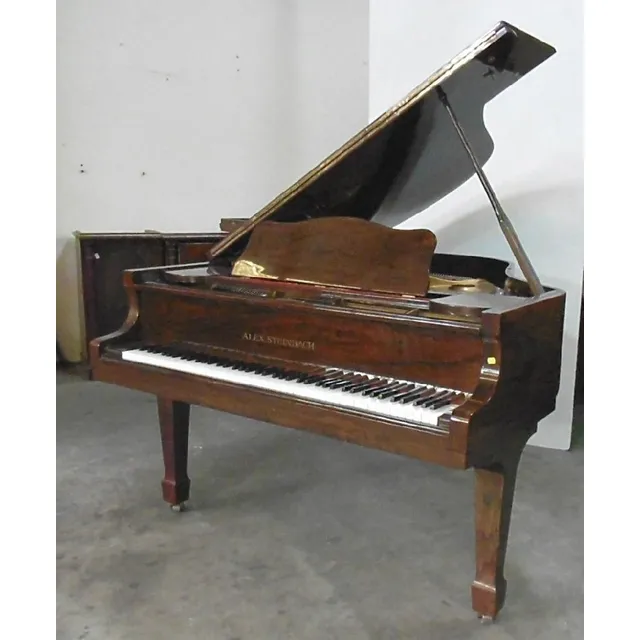
Ilse and Steinbach Grand Piano, 1982 Purchase
A Steinbach grand piano. The inside marked Ilse and Steinbach, 820670. Purchased in 1982.
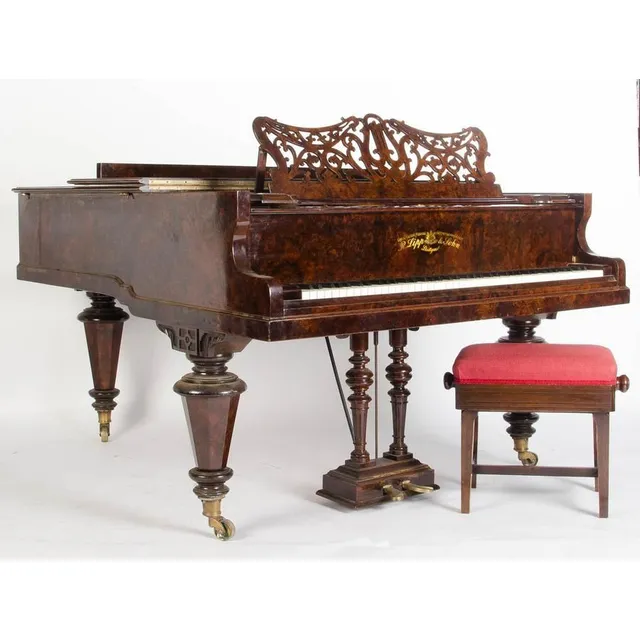
Burr Walnut Baby Grand Piano by R. Lipp & Sohn
A burr walnut baby grand piano by R. Lipp & Sohn, Stuttgart, German, 19th century. Together with an upholstered adjustable piano seat. 97 cm high, 144 cm wide, 186 cm deep
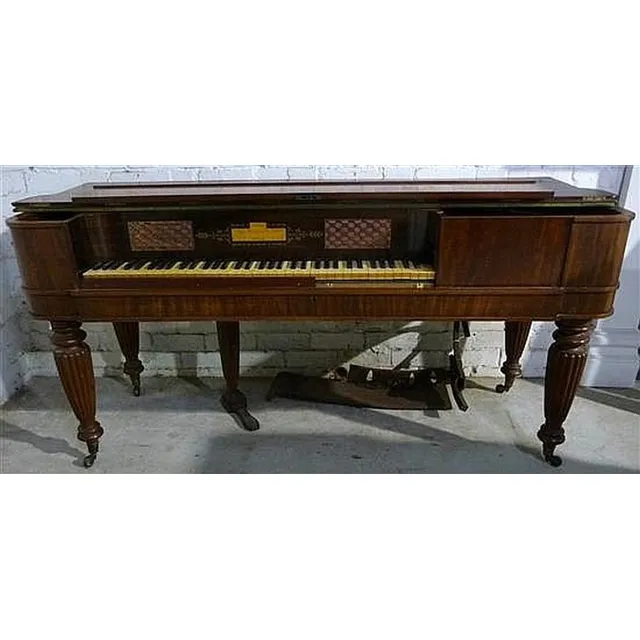
George IV Mahogany Parlour Piano by Broadwood & Sons
A George IV mahogany square parlour piano by John Broadwood & Sons, London. Featuring brass inlay and decoration above keyboard. Fluted legs. 87 cm high, 177 cm wide, 72 cm deep
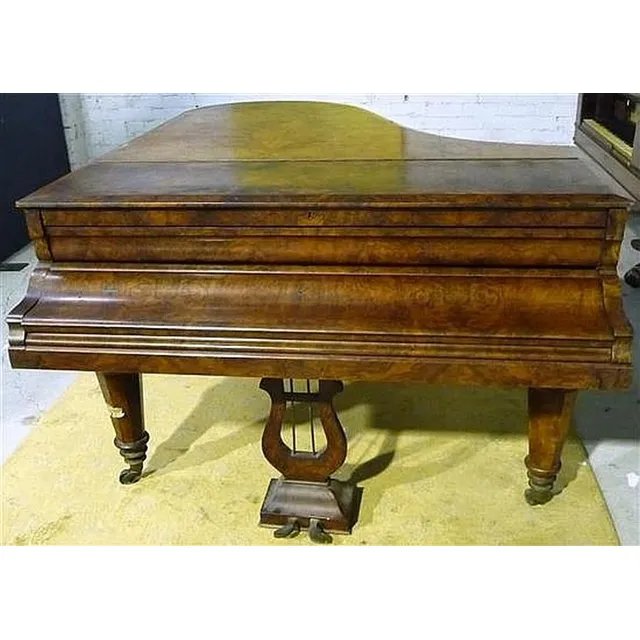
Ernst Raps Burr Walnut Baby Grand Piano
A baby grand piano in a superb burr walnut case by Ernst Raps. 94 cm high, 136 cm wide, 180 cm deep
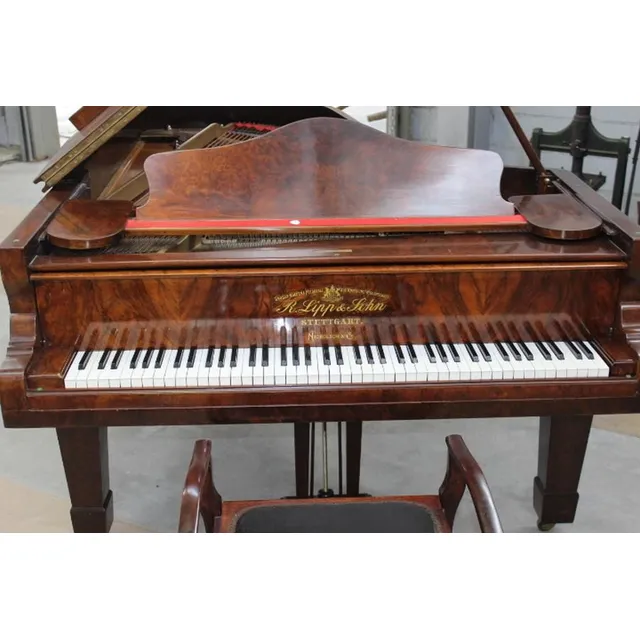
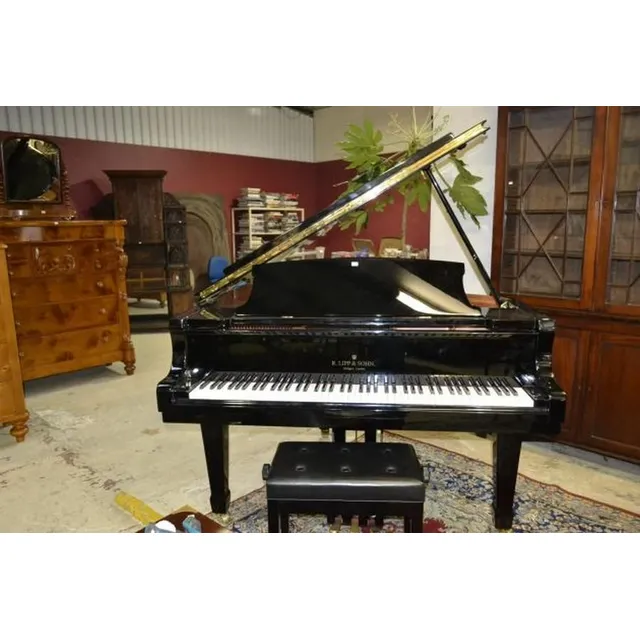
Black Baby Grand Piano with Matching Stool - Excellent Condition
'Richard Lipp and Sohn' baby grand pianoforte with black polished finish and matching adjustable stool, (as new, 3 years old)
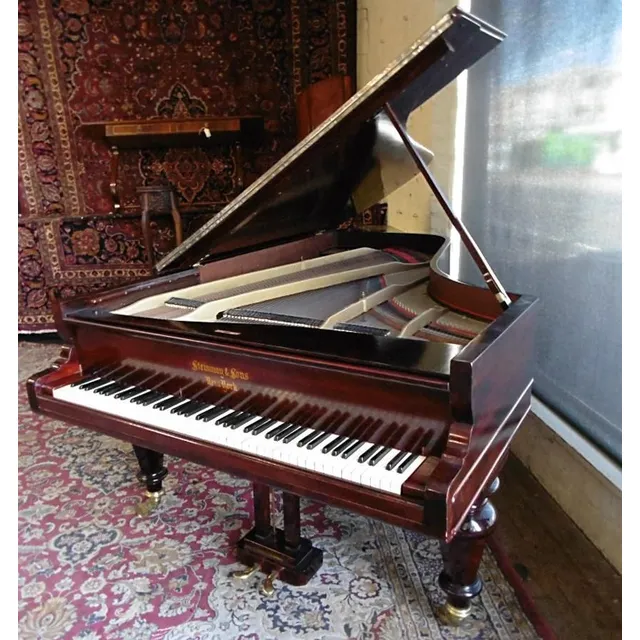
1875 Steinway Boudoir Grand Piano in Mahogany
A Steinway & Sons New York mahogany cased Boudoir Grand Piano. Circa 1875. Serial No. 28570
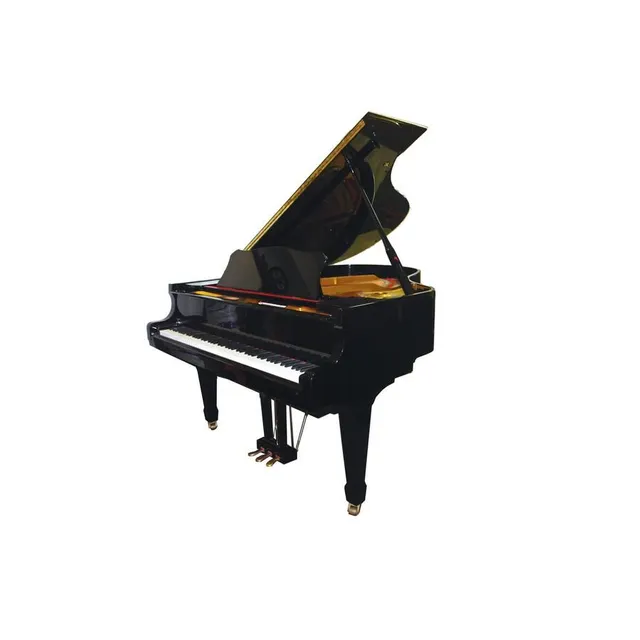
Beale 6ft Black Grand Piano with Stool
A quality modern Beale 6 foot black lacquered grand piano, in very good all round condition, complete with stool. One Auckland owner since new. 190 cm x 151 cm x 101.5 cm
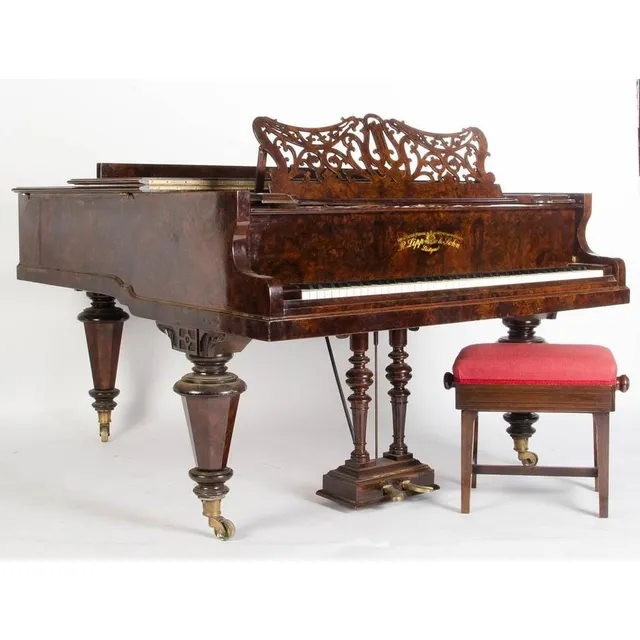
Burr Walnut Baby Grand Piano & Seat
A burr walnut baby grand piano by R. Lipp & Sohn, Stuttgart, German, 19th century, together with an upholstered adjustable piano seat. 97 cm high, 144 cm wide, 186 cm deep
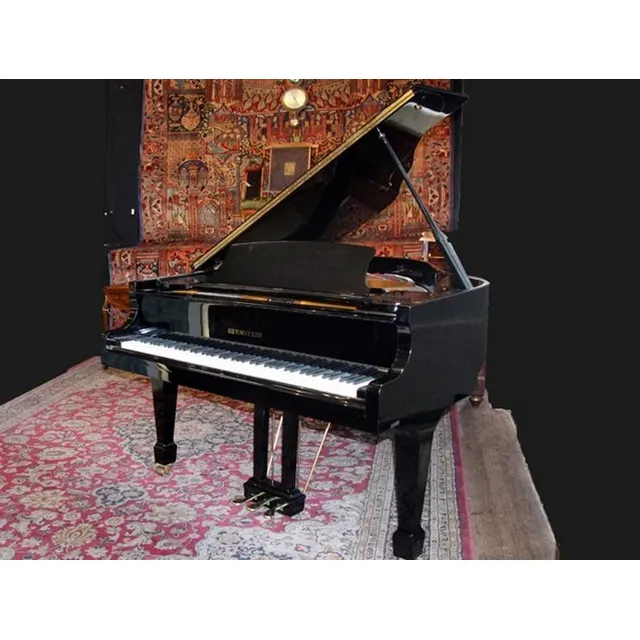
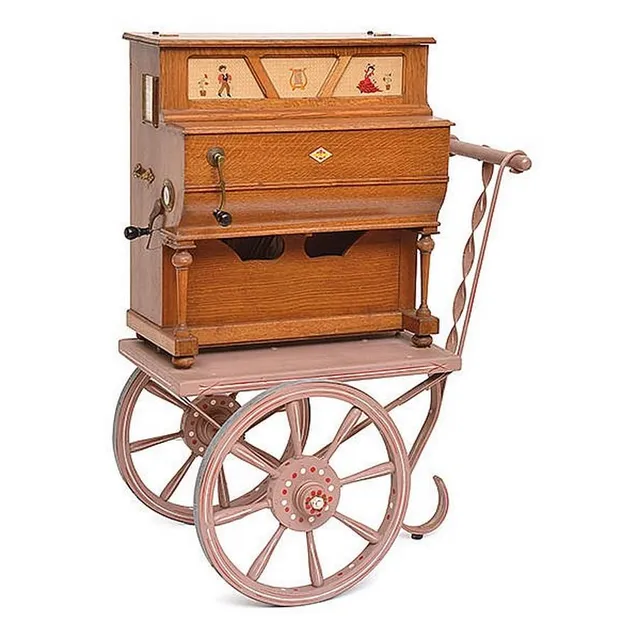
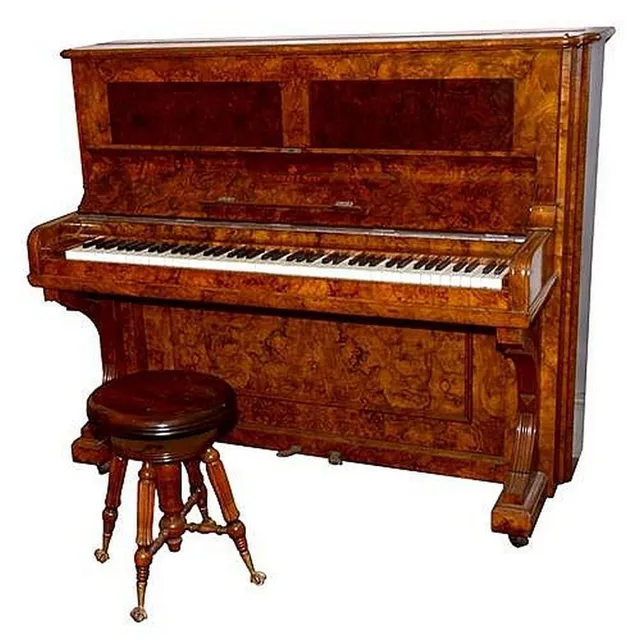
Antique Steinway Upright Piano with Tonk & Co. Stool
Steinway & Sons burr walnut upright piano, American with 1878 patent, and a 19th century American beech circular piano stool by Tonk & Co., New York
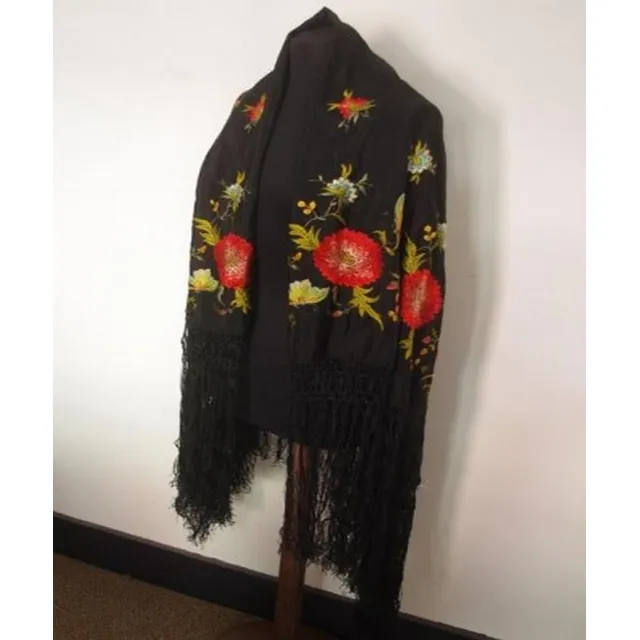
1920s Chinese Embroidered Piano Shawl
Chinese embroidered piano shawl, with a black silk ground with long silk fringing decorated in silk embroidery depicting flowers and butterflies in a bordering design with smaller repeating floral motifs to centre, circa 1920s, size 130 x 135 cm (not…
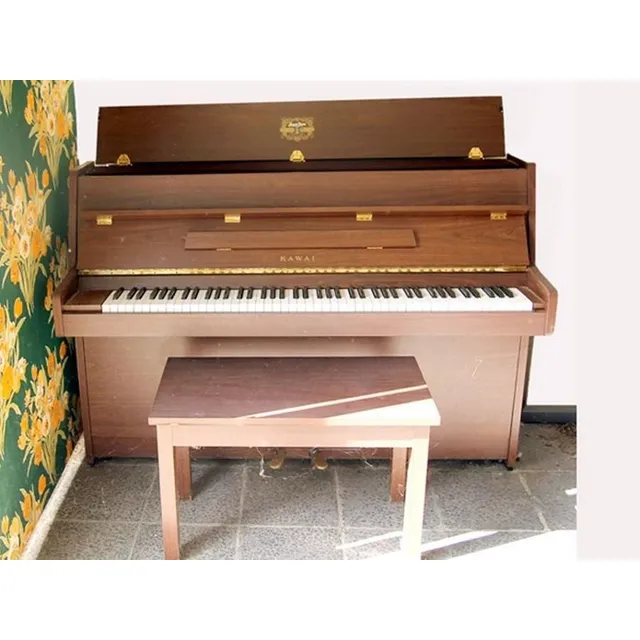
Kawai CS5 Upright Piano from Japan
A Kawai upright piano. Made in Japan. Model: CS5. Number: 1862979
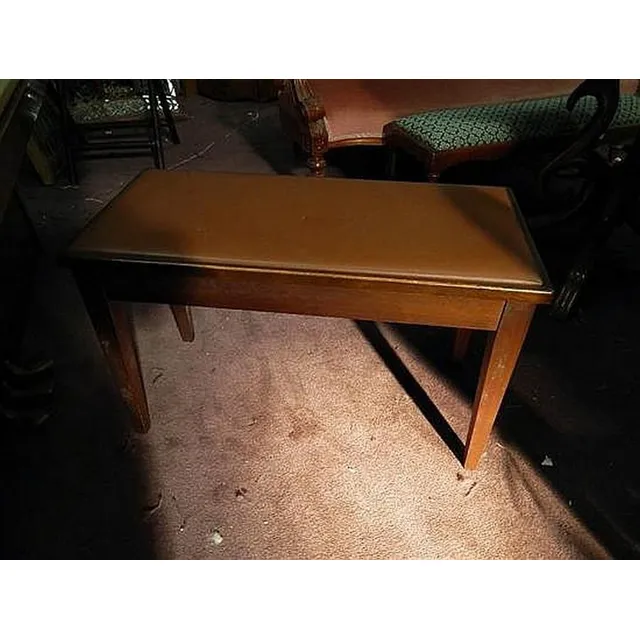
Brown Leather Piano Bench - 75x35 cm
A rectangual piano bench with brown leather upholstery length 75 cm width 35 cm
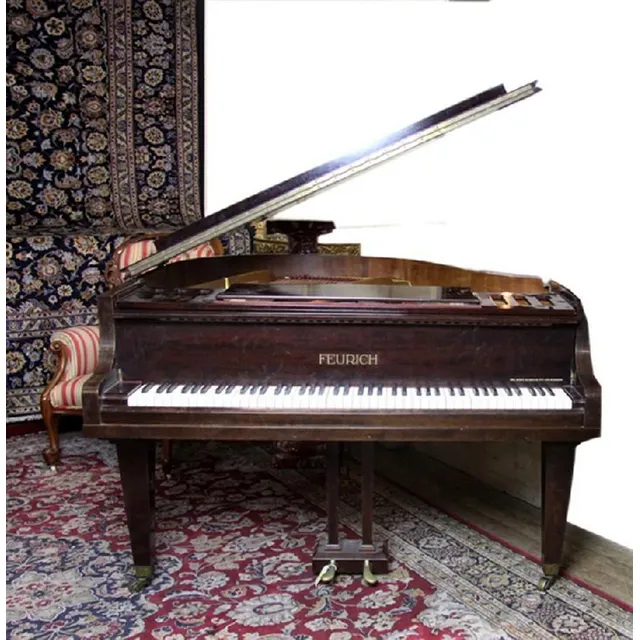
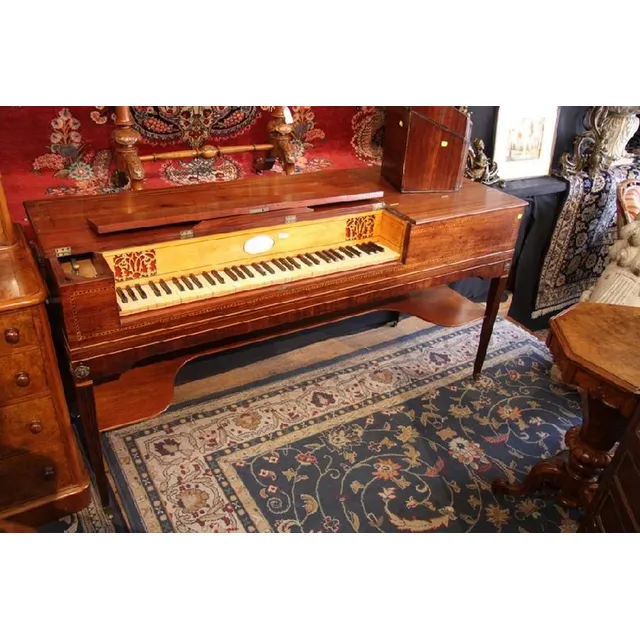
Antique Square Pianoforte, London 1802
A J Longman & Co Cheapside London pianoforte, 1802. The square form pale mahogany case with ebony wood stringing throughout, inscribed '1802'
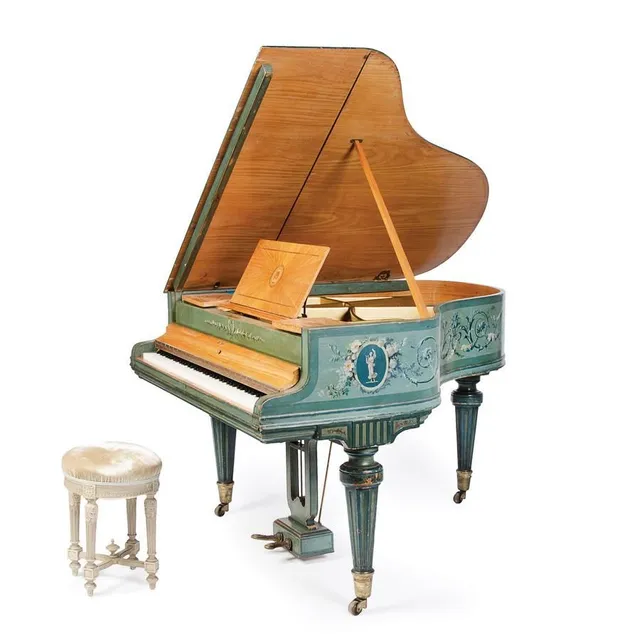
Fine French Baby Grand Piano by Gaveau
A finely painted baby grand piano by Joseph Gabriel Gaveau French, circa 1890, together with an upholstered stool, approx. 140 cm wide, 140 cm deep. Joseph-Gabriel Gaveau, (1824-1893) was a specialist piano maker based in Paris and renown for art cases…
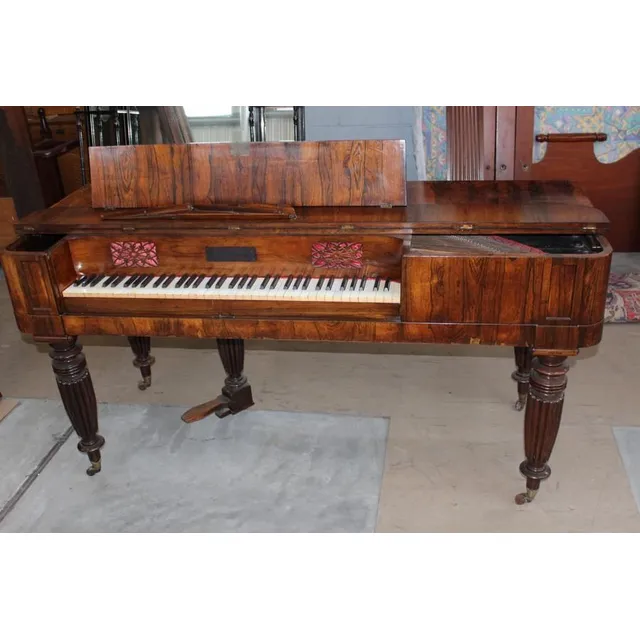
Antique Rosewood Table Piano on Fluted Legs
Early rosewood cased table piano on fluted legs (Believed to be one of the first in Tasmania)
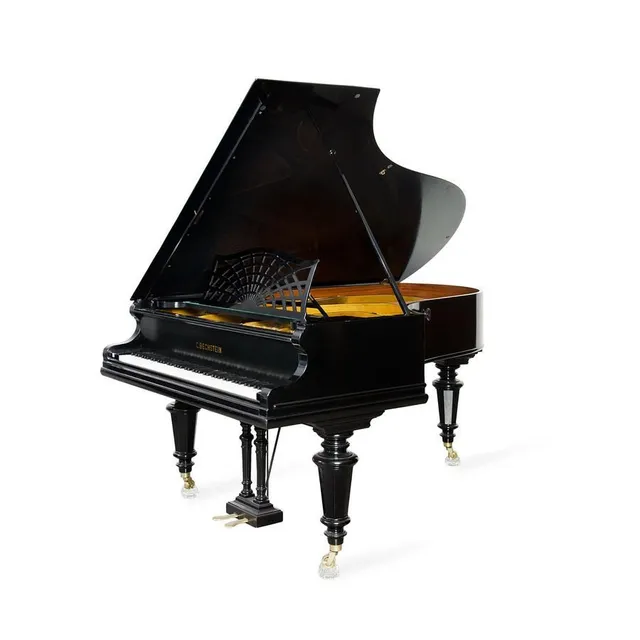
1893 German C. Bechstein Grand Piano
An ebonised grand piano, maker C. Bechstein, German, dated 1893, model B Serial number 34452, 102 cm high, 150 cm wide, 200 cm long
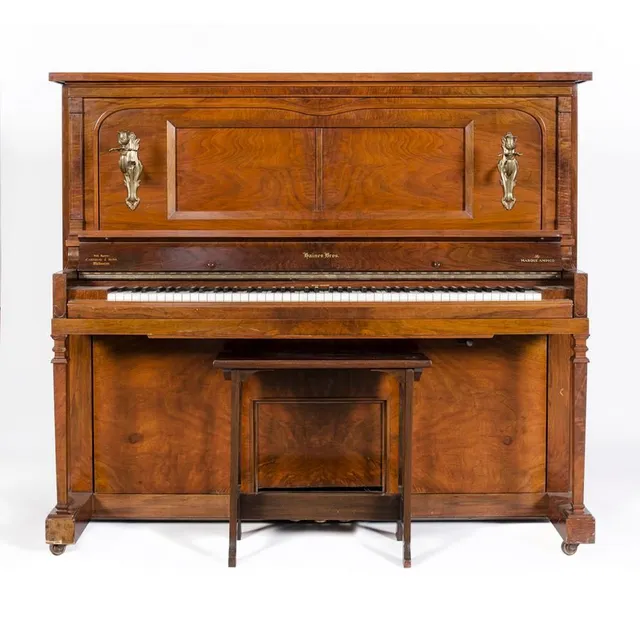
1927 Marque Ampico Player Piano with Original Accessories
Haines Bros. The Marque Ampico: walnut cased tonal player piano with original sconces, stall and rolls circa 1927. 160 x 80 x 137 cm
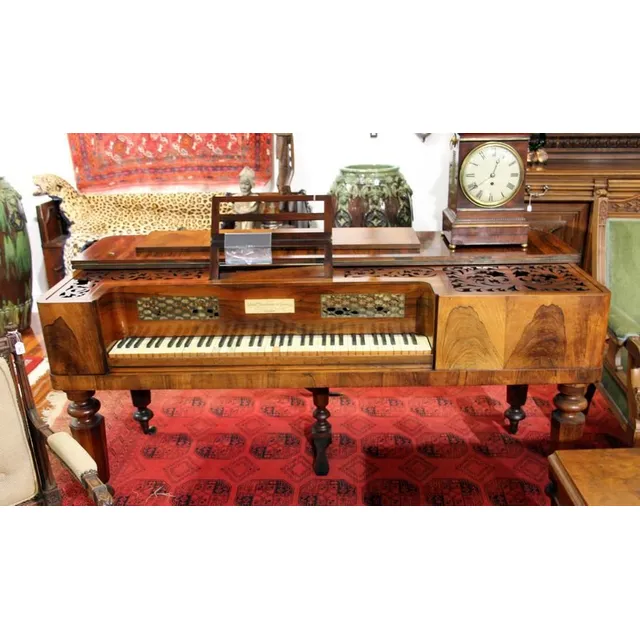
Rosewood Spinet Piano by Broadwood & Sons, London
An early 19th century rosewood spinet piano, by John Broadwood & Sons, London. The rectangular rosewood case raised on octagonal legs, the interior with freted panels. Height 87 cm. Width 178 cm. Depth 76 cm
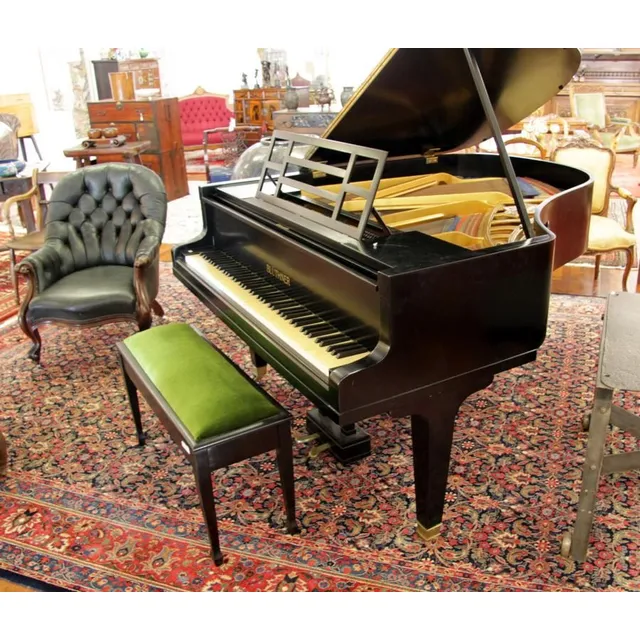
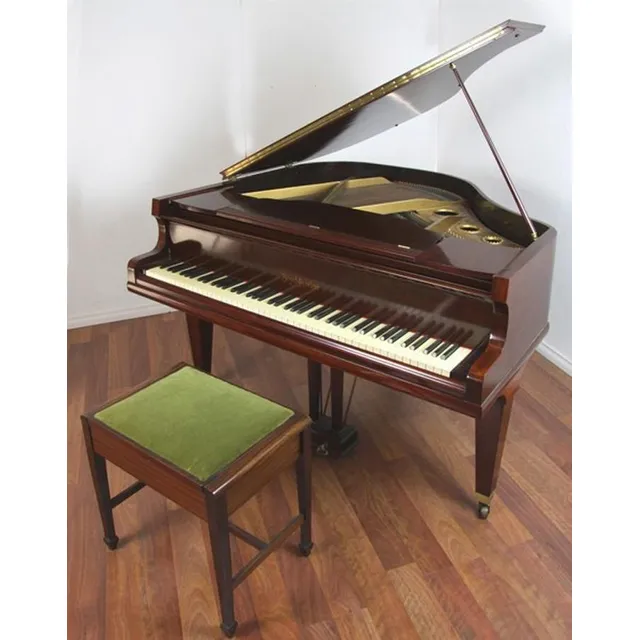
Boyd London Baby Grand Piano with Stool and Receipt
A baby grand piano, maker Boyd London number 2912, in a mahogany case with matching stool. Original receipt, and is sold on behalf purchaser
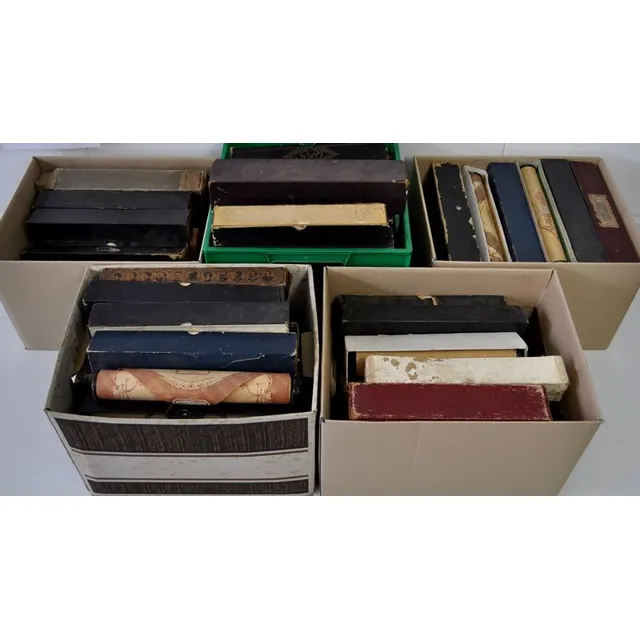
Mixed American and Australian Player Piano Rolls
Five boxes of player piano Rolls. Various American and Australian brands of standard rolls
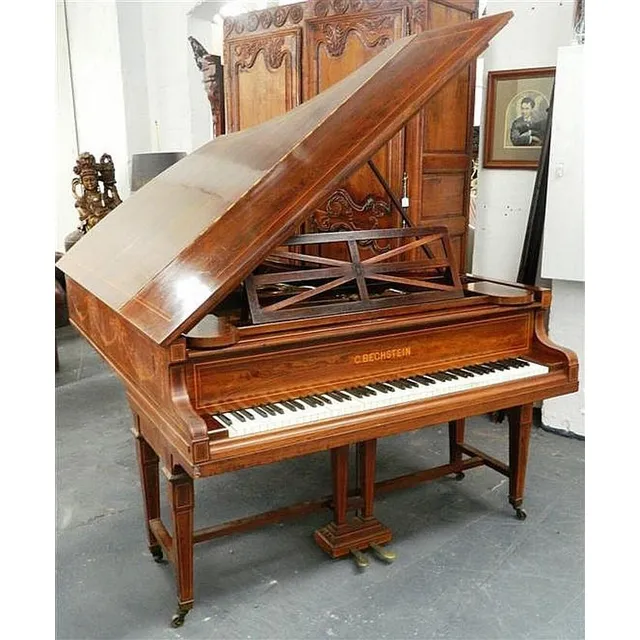
Bechstein Satinwood Inlay Medium Grand Piano c1895 (21151)
A fine Bechstein satinwood inlay medium grand piano c1895, serial number 21151 (underneath the case) corresponds to that found on the music stand
 Loading more...